

PVC vs PE Traffic Cone: Key Differences & Buying Guide
Traffic cones are essential safety devices for road construction, traffic control, parking management, and temporary work zones. When sourcing traffic cones for commercial projects, distributors and contractors often compare two common materials: PVC (polyvinyl chloride) and PE (polyethylene).
But which is better: a PVC traffic cone or a PE traffic cone?
The answer depends on your application, budget, durability requirements, and expected operating conditions. PVC traffic cones are often preferred when flexibility and impact recovery are important, while PE traffic cones can be an economical choice for large-volume orders and general traffic control.
In this guide, we compare PVC vs PE traffic cones in terms of material properties, flexibility, durability, weight, cost, and applications to help you make an informed purchasing decision.
PVC vs PE Traffic Cone: Quick Comparison
| Feature | PVC Traffic Cone | PE Traffic Cone |
|---|---|---|
| Full material name | Polyvinyl chloride | Polyethylene |
| Flexibility | Often highly flexible, depending on formulation | Depends on PE grade and product design |
| Impact recovery | Flexible models can recover after minor impacts | Varies with material grade and construction |
| Weight | Depends on cone design and base | Depends on cone design and base |
| Durability | Depends on formulation, thickness, and UV protection | Depends on grade, thickness, and UV protection |
| Typical construction | Often available in one-piece designs | Often available with a separate base |
| Price | Varies by specification; may cost more for comparable models | Often economical for standard designs |
| Common applications | Road work, construction zones, repeated handling | Parking areas, temporary warnings, general traffic control |
Note: These are general product characteristics, not universal rules. Actual performance depends on the complete cone design, material formulation, base construction, and manufacturing quality.
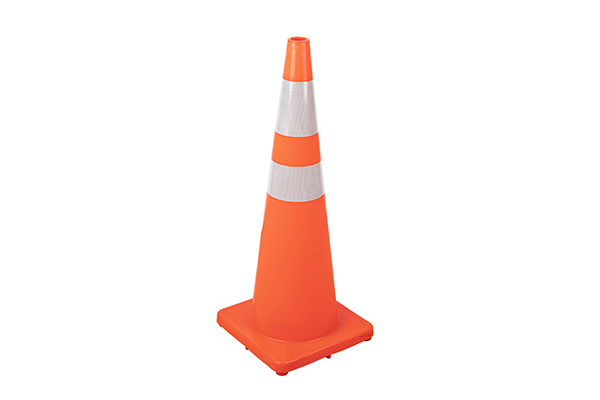
What is a PVC Traffic Cone?
A PVC traffic cone is made primarily from polyvinyl chloride, a versatile plastic that can be formulated to produce either rigid or flexible products. Flexible PVC is commonly used for traffic cones that need to withstand routine handling and occasional vehicle contact.
Key Advantages of PVC Traffic Cones
Excellent flexibility
One of the main advantages of flexible PVC is its ability to bend under pressure. Depending on the formulation and design, a cone may return toward its original shape after being knocked over or compressed.
Good impact recovery
Traffic cones in active work zones may be accidentally hit by vehicles or construction equipment. A properly designed flexible PVC cone can tolerate minor impacts without immediately cracking or remaining permanently deformed.
Suitable for repeated use
For contractors, road maintenance companies, and equipment rental businesses, reusable traffic cones can help reduce replacement frequency. The actual service life depends on exposure, handling, and product quality.
Multiple design options
PVC traffic cones are available in different heights, colors, weights, and reflective configurations. Buyers can select models based on project requirements and local traffic safety specifications.
Common Applications of PVC Traffic Cones
PVC traffic cones are suitable for applications such as:
- Road construction and maintenance
- Temporary lane separation
- Highway and municipal work zones
- Parking and traffic management
- Construction site safety
- Repeated deployment and collection
For projects where cones may experience frequent contact or handling, flexible PVC is worth considering.
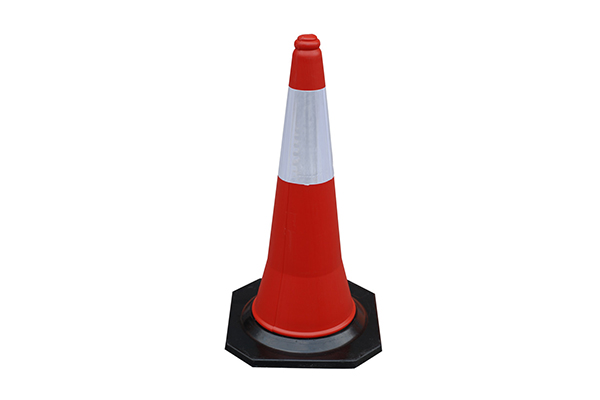
What is a PE Traffic Cone?
A PE traffic cone is made from polyethylene, a thermoplastic widely used in traffic safety products, packaging, and industrial applications.
PE traffic cones are often manufactured using molding processes and may feature a separate base. Depending on the design, the base can be made from rubber, recycled PVC, or another suitable material.
Key Advantages of PE Traffic Cones
Cost-effective purchasing
PE traffic cones are often available in economical designs, making them attractive for distributors, wholesalers, contractors, and buyers purchasing large quantities.
Practical handling
Some PE cone designs are relatively lightweight, allowing workers to carry, stack, and deploy multiple cones efficiently. However, the complete product weight depends heavily on its base.
Flexible product configurations
A separate-base design allows manufacturers to offer different base weights and dimensions. Buyers can select a configuration that balances portability, stability, and price.
Versatile applications
PE traffic cones can be used in parking facilities, warehouses, private roads, temporary warning areas, and other general traffic management environments.
Common Applications of PE Traffic Cones
PE traffic cones may be suitable for:
- Parking lots and garages
- Warehouses and industrial facilities
- Temporary road warnings
- Event traffic management
- Private roads and access control
- Large-volume, cost-sensitive projects
When price, handling efficiency, and purchasing volume are key considerations, PE traffic cones can be a practical option.
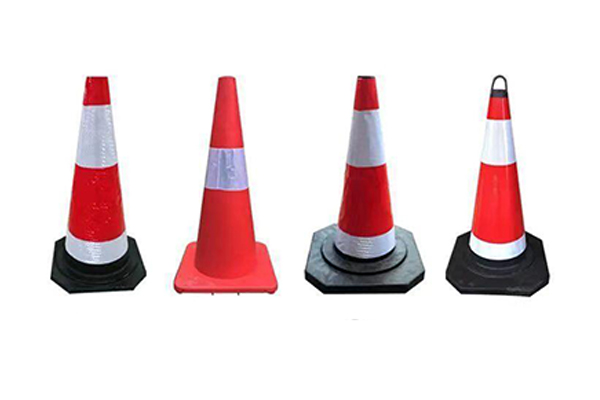
PVC vs PE Traffic Cone: 6 Key Differences
1. Material Flexibility
PVC traffic cones are often more flexible, allowing them to bend and recover after minor impacts. PE cones vary in flexibility depending on their material grade and design. Flexible PVC is a good option for work zones with frequent handling.
2. Impact Resistance and Durability
Both materials can provide good durability. PVC cones may perform well under repeated minor impacts, while PE cone durability depends on material quality and construction. Actual service life also depends on usage and environmental conditions.
3. Weight and Stability
Traffic cone weight depends on the body, base material, and dimensions. Lightweight cones are easier to handle, while heavier bases can improve stability in windy areas. Compare total weight and base size before purchasing.
4. UV Resistance and Outdoor Performance
Both PVC and PE cones can be designed for outdoor use. However, prolonged sunlight and temperature changes may affect their color and flexibility. For long-term outdoor applications, choose products with suitable UV protection.
5. Cost and Overall Value
PE traffic cones are often an economical choice for standard applications and bulk orders. PVC cones may cost more depending on their formulation and design. Buyers should compare unit price, expected service life, and replacement costs.
6. Reflectivity and Nighttime Visibility
Both PVC and PE traffic cones can feature reflective bands for improved nighttime visibility. Reflective performance depends on the band material and specifications, not just the cone body. Always check the visibility requirements for your project.
PVC or PE Traffic Cone: Which Should You Choose?
The best material depends on your operating environment and procurement priorities.
Choose PVC Traffic Cones If:
- You need a flexible cone with good recovery after minor impacts.
- The cones will be used repeatedly in active work zones.
- Frequent handling or accidental contact is expected.
- Your project requires a particular flexible cone design.
- You prioritize impact recovery alongside other durability requirements.
Choose PE Traffic Cones If:
- You need an economical solution for general traffic control.
- You are purchasing large quantities for multiple locations.
- Easy handling and practical storage are important.
- You prefer a separate-base design with configurable weight.
- The application does not require a specific flexible-cone design.
Conclusion
PVC and PE traffic cones each offer practical advantages for different traffic safety applications.
PVC traffic cones are worth considering when flexibility and recovery after minor impacts are important. PE traffic cones are often a practical choice when economical purchasing, handling, and configurable base designs are priorities.
Looking for a reliable traffic cone supplier? Contact our team to discuss your required specifications, bulk order quantities, and customization options.