

Street Light Types: A Practical Guide
Street lights improve nighttime visibility and help make roads, sidewalks, parking areas, and public spaces safer. However, not every street light is designed for the same environment.
Street light types can be classified by their power source, light source, structure, and application. Understanding these differences makes it easier to choose a suitable lighting system for a project.
Main Types of Street Lights
The most common street light types include:
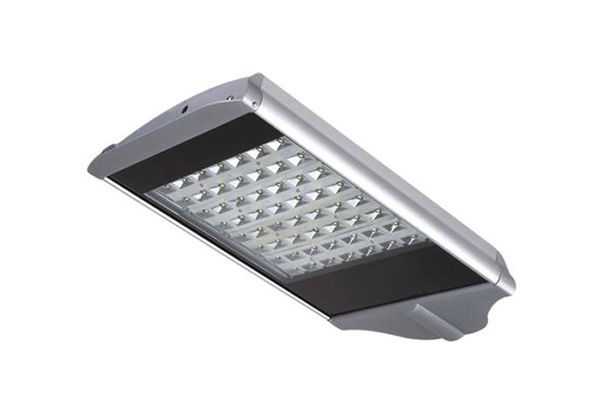
LED Street Lights
LED street lights use light-emitting diodes as their light source. They are now widely used for urban roads, highways, residential streets, industrial parks, and parking areas.
Compared with traditional lamps, LED street lights consume less electricity and provide more directional illumination. Their long service life also helps reduce maintenance and replacement costs.
Main advantages:
- High energy efficiency
- Long operating life
- Low maintenance requirements
- Fast startup without a warm-up period
- Good brightness and color rendering
- Easy integration with smart controls
LED street lights can operate with grid electricity, solar power, or a hybrid power system.
Solar Street Lights
Solar street lights generate electricity through solar panels and store it in batteries for nighttime use. They do not require connection to the electrical grid, making them suitable for remote locations and areas where cable installation is difficult or expensive.
A typical solar street light includes a solar panel, LED lamp, battery, controller, light pole, and mounting brackets.
Common solar street light types:
All in One Solar Street Lights
An all in one solar street light integrates the LED lamp, solar panel, battery, and controller into one compact unit. It is easy to transport and install, making it suitable for residential streets, parks, pathways, and small roads.
Split Type Solar Street Lights
A split type solar street light has separate solar panels, lamps, and batteries. The angle and size of each component can be adjusted according to project requirements.
This design is often used for wider roads, highways, and locations requiring higher power or longer lighting hours.
All in Two Solar Street Lights
An all in two system combines the LED lamp, battery, and controller in one housing while keeping the solar panel separate. It offers a balance between compact installation and flexible solar panel positioning.
High-Pressure Sodium Street Lights
High-pressure sodium, or HPS, street lights produce a warm yellow-orange light. They were commonly installed along highways, bridges, tunnels, and major roads.
HPS lamps provide high luminous efficiency, but they have poorer color rendering than LEDs. They also require more maintenance and take time to reach full brightness.
Many cities are gradually replacing HPS lamps with LED street lights to reduce energy consumption and maintenance costs.
Metal Halide Street Lights
Metal halide street lights produce bright white light with better color rendering than high-pressure sodium lamps. They have been used in roads, stadiums, parking areas, and large outdoor spaces.
However, metal halide lamps consume more electricity, have a shorter lifespan, and require a warm-up period. LED fixtures are now a more common choice for new projects.
Induction Street Lights
Induction street lights generate light through electromagnetic induction rather than conventional electrodes. They offer a relatively long lifespan and stable illumination.
Although induction lamps require less maintenance than some traditional lights, they are larger and less energy-efficient than modern LED fixtures. As a result, they are now less commonly selected for new street lighting projects.
Smart Street Lights
Smart street lights use sensors, controllers, and communication systems to adjust lighting automatically. They may change brightness according to traffic flow, pedestrian activity, time, or weather conditions.
Some systems can also provide remote monitoring, fault alerts, energy-use data, and scheduled dimming.
Smart street lights are suitable for smart cities, highways, industrial parks, campuses, and large municipal lighting projects.
High-Mast Lights
High-mast lighting systems use tall poles, typically between 15 and 40 meters, to illuminate large areas. Several high-power LED floodlights are mounted at the top of the pole.
They are commonly installed in:
- Highway interchanges
- Airports
- Seaports
- Stadiums
- Large parking areas
- Logistics centers
- Industrial sites
Because high-mast lights cover a wide area, projects require careful planning of pole height, fixture power, beam angle, foundation design, and spacing.
Street Light Types by Power Source
Street lights can also be divided according to how they receive electricity.
| Power source | How it works | Suitable applications |
|---|---|---|
| Grid-powered | Connects directly to the electrical grid | Urban roads, highways and commercial areas |
| Solar-powered | Uses solar panels and battery storage | Rural roads, parks and remote locations |
| Hybrid | Combines solar energy with grid or wind power | Areas requiring greater lighting reliability |
Street Light Types by Application
Different roads and public spaces require different lighting arrangements.
Highway Street Lights
Highway lights normally use powerful LED fixtures installed on tall poles. They require wide light distribution, high brightness, and reliable performance in outdoor conditions.
Residential Street Lights
Residential street lights usually provide softer and more uniform illumination. Their design should limit glare while maintaining visibility for drivers and pedestrians.
Decorative Street Lights
Decorative street lights combine illumination with an attractive pole and fixture design. They are often used in parks, plazas, pedestrian streets, resorts, and commercial districts.
Garden and Pathway Lights
These lights are installed along sidewalks, gardens, parks, and community pathways. They are generally lower and less powerful than standard road lights.
Parking Lot Lights
Parking areas require broad, uniform lighting to improve visibility and security. LED fixtures, solar street lights, and high-mast systems are common options.
How to Choose the Right Street Light Type
When choosing a street light, consider the following factors:
- Road width and pole height: Wider roads and taller poles usually require higher lumen output and wider light distribution.
- Power supply: Choose grid-powered lights where electricity is stable or solar street lights where cabling is difficult.
- Lighting requirements: Consider the required brightness, illumination area, pole spacing, and operating hours.
- Local weather: Solar radiation, rainfall, wind, temperature, and coastal conditions can affect product selection.
- Energy efficiency: LED street lights generally consume less electricity and require less maintenance than traditional lamps.
- Smart functions: Timers, motion sensors, automatic dimming, and remote monitoring can improve efficiency and control.
- Project budget: Compare the initial purchase, installation, electricity, and long-term maintenance costs.
Conclusion
Different street light types are designed for different roads, environments, and lighting needs. LED street lights are suitable for most modern projects, while solar street lights provide a practical solution for locations without convenient grid access.
The right choice depends on the road width, pole height, required brightness, power availability, local climate, and project budget. Evaluating these factors will help you build a reliable, energy-efficient, and cost-effective street lighting system.