

Detour Sign: Meaning, Shape, Color, Types, and Uses
Detour signs are essential traffic control devices used to guide motorists and pedestrians around road closures, construction zones, and restricted areas. They provide clear directions to alternative routes, helping maintain traffic flow and improve road safety.
Whether used for highway construction, road maintenance, or temporary traffic management, detour signs play an important role in preventing confusion and keeping road users away from hazardous areas.
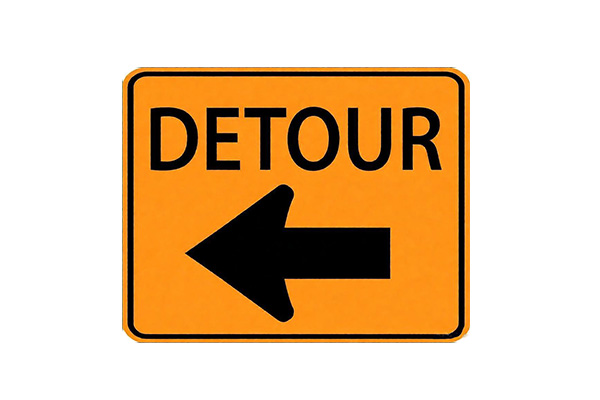
What is a Detour Sign?
A detour sign is a traffic control sign that directs road users away from a closed or restricted route and toward an alternative path. It is commonly installed near road construction sites, maintenance areas, accident scenes, and other locations where normal traffic routes are unavailable.
Detour signs usually feature the word “DETOUR” along with directional arrows or additional instructions. They help drivers identify route changes in advance and follow a designated alternative route safely.
Detour Sign Meaning
The meaning of a detour sign is simple: the normal route is temporarily unavailable, and road users must follow another designated route.
Depending on the sign design, it may provide different types of information:
- Route Change: Indicates that motorists need to leave their usual route.
- Directional Guidance: Uses arrows to show the correct direction.
- Advance Warning: Alerts drivers to an upcoming detour before reaching the affected area.
- Pedestrian Guidance: Directs pedestrians around sidewalks or walkways that are temporarily closed.
- Route Completion: Indicates that the temporary detour has ended and normal traffic routes can be resumed.
Following detour signs helps reduce traffic confusion and improves safety around road work zones.
What Shape is a Detour Sign?
In the United States, a standard temporary detour sign is generally rectangular, with a horizontal orientation. Its dimensions depend on the road type, traffic speed, and applicable MUTCD requirements.
Different detour-related signs may have different shapes depending on their messages and functions. For example, directional signs and pedestrian detour signs may use different layouts and symbols.
The rectangular design provides sufficient space for clear lettering, arrows, and additional traffic instructions, making it easy for motorists to recognize and understand the message.
What Color is a Detour Sign?
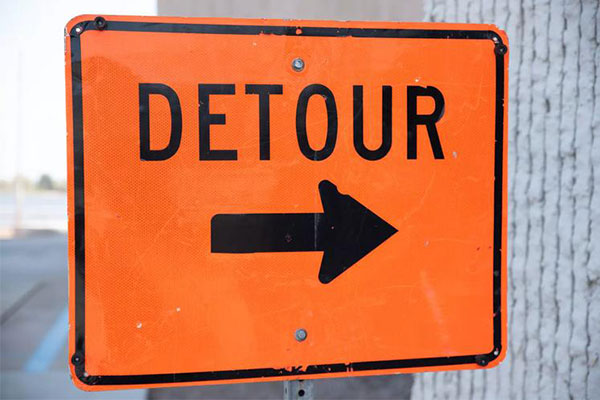
In the United States, standard temporary detour signs are generally orange with black lettering, arrows, or symbols.
Orange is widely used for temporary traffic control because it attracts attention and helps distinguish construction-related warnings and instructions from permanent traffic signs.
Color requirements may vary in other countries, so buyers should always check the traffic sign standards applicable to their projects.
Types of Detour Signs
Different types of detour signs are designed to provide specific information at different stages of a temporary route change.
1. Temporary Detour Sign
A temporary detour sign is used to guide traffic around road closures or construction areas for a limited period. It is commonly installed on portable sign stands or temporary traffic control supports. These signs are widely used for road repairs, utility installation, highway maintenance, and infrastructure construction.
Their portable design makes them easy to install, remove, and relocate as project conditions change.
2. Detour Ahead Sign
A Detour Ahead sign warns motorists that a detour route is approaching. It gives drivers advance notice so they have enough time to slow down, prepare for a route change, and follow the designated directions.
These signs are particularly useful on highways and roads with higher traffic speeds, where early warnings are important for safe driving.
3. Pedestrian Detour Sign
A Pedestrian Detour sign directs pedestrians away from closed sidewalks, walkways, or construction areas toward a safe alternative walking route.
It is commonly used during sidewalk repairs, building construction, utility work, and urban infrastructure projects. Clear pedestrian detour signs help separate pedestrians from construction activities and reduce potential safety hazards.
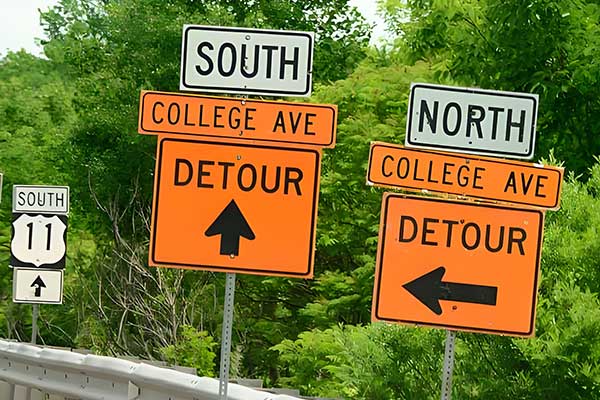
4. Detour Arrow Sign
A Detour Arrow sign uses directional arrows to show motorists which way to travel along an alternative route.
Depending on the road layout, arrows may point left, right, or straight ahead. These signs are typically placed at intersections, road junctions, and important decision points along a detour route.
They help drivers follow the correct direction without confusion.
5. End Detour Sign
An End Detour sign informs motorists that the temporary detour route has finished and they can return to the normal traffic route.
It is generally installed near the end of a designated detour route to provide clear information and prevent drivers from continuing along an unnecessary alternative route.
6. Detour 1000 ft Sign
A Detour 1000 ft sign provides advance notice that a detour or route change is located approximately 1,000 feet ahead. It gives drivers additional time to prepare for upcoming traffic changes, adjust their speed, and select the correct lane when necessary.
These signs are particularly useful on highways and roads where motorists need sufficient distance to respond safely.
Where Are Detour Signs Used?
Detour signs are widely used in different road and infrastructure projects.
- Road Construction: Redirect traffic around construction zones and closed roads.
- Highway Maintenance: Guide motorists around lane closures and highway repair areas.
- Bridge Repairs: Provide alternative routes when bridges are temporarily inaccessible.
- Utility Projects: Direct traffic and pedestrians around pipeline, electrical, and telecommunications work.
- Emergency Situations: Help manage traffic during accidents, flooding, and other unexpected road closures.
Proper placement is essential to ensure that road users receive clear instructions before reaching restricted areas.
Detour Sign Materials and Reflective Requirements
The material used to manufacture a detour sign affects its durability, weight, and performance in outdoor environments.
Common sign substrate materials include:
- Aluminum: Lightweight, corrosion-resistant, and suitable for long-term outdoor applications.
- Corrugated Plastic: Economical and lightweight, making it suitable for temporary traffic signs.
- Plywood: Used for certain temporary signage applications depending on project requirements.
Reflective sheeting is another important consideration. Common options include Engineering Grade (EG), High Intensity Prismatic (HIP), and Diamond Grade (DG).
The appropriate reflective material depends on the road environment, traffic conditions, and applicable regulations.
Detour Signs vs. Road Closed Signs
Although detour signs and road closed signs are often used together, they serve different purposes.
A road closed sign informs motorists that a specific road or section is inaccessible. A detour sign provides directions to an alternative route.
For example, a road closed sign may be placed at the entrance to a restricted road, while directional detour signs are installed at nearby intersections to guide traffic around the closure.
Using both signs together helps improve traffic organization and reduce driver confusion.
Conclusion
Now that you have a better understanding of detour signs, Roadsky is a professional road traffic sign supplier offering reliable products for various road construction and traffic management projects. If you are looking for high-quality traffic signs for your project, contact Roadsky today to explore our product range and get a competitive quotation.