

Factors Affecting Solar Street Light Prices: Buyer’s Guide
Solar street light prices can vary significantly depending on the product specifications, component quality, and project requirements. For importers, distributors, contractors, and project owners, understanding these factors is important when comparing suppliers and preparing a project budget.
Below are the main factors that affect the price of solar street lights.
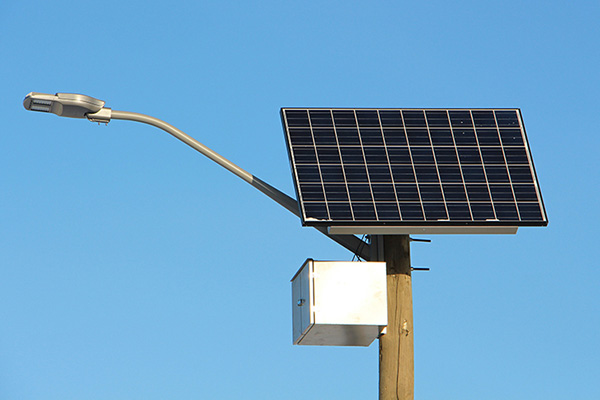
What Factors Affect Solar Street Light Prices?
1. Solar Panel Power and Efficiency
The solar panel is one of the key components of a solar street light. Its power and efficiency directly affect the system’s energy generation capacity.
Higher-power and higher-efficiency solar panels generally cost more, but they can provide more energy for the lighting system. The required panel size depends on factors such as LED power, operating hours, local sunlight conditions, and battery capacity.
Monocrystalline solar panels are commonly used because of their high efficiency and good performance.
2. Battery Type and Capacity
The battery stores solar energy during the day and powers the LED light at night, making it another major factor affecting solar street light prices.
Common battery types include LiFePO4, lithium-ion, gel, and lead-acid batteries. LiFePO4 batteries are widely used in modern solar street lights because of their long cycle life and stable performance.
A larger battery capacity can provide longer lighting time and more backup days, but it also increases the system cost. Buyers should consider battery capacity, cycle life, warranty, and expected service life instead of looking only at the initial price.
3. LED Power and Efficiency
LED power is often used to describe solar street lights, but wattage alone does not determine lighting performance.
The efficiency of the LED, luminous flux, optical design, and light distribution also affect the actual illumination. A high-efficiency LED system can provide sufficient brightness with lower power consumption.
When comparing products, buyers should look at:
- LED power
- Luminous efficacy
- Luminous flux
- Light distribution
- LED lifetime
Choosing the right LED configuration can help balance lighting performance and overall system cost.
4. Controller Type
The solar controller manages the charging and discharging of the battery and controls the LED lighting system.
Basic controllers provide functions such as overcharge, over-discharge, and short-circuit protection. More advanced controllers, such as MPPT controllers, can improve energy utilization and may support intelligent lighting functions.
Features such as dimming, motion sensing, remote monitoring, and programmable lighting schedules can also increase the price.
5. Pole Specifications
For complete solar street light systems, the street light pole can have a significant impact on the total price.
Pole cost depends on:
- Pole height
- Steel thickness
- Material
- Design
- Galvanization
- Wind-load requirements
Taller and heavier poles generally require more materials and stronger structural performance.
For outdoor projects, hot-dip galvanized steel poles are commonly selected because they provide good corrosion resistance. Buyers should choose pole specifications according to local environmental and installation requirements.
6. Lighting Requirements
Different projects require different lighting performance, which directly affects the solar street light configuration and price.
For example, a residential road may require a different system from a highway, parking lot, industrial area, or commercial road.
Important requirements include:
- Lighting hours per night
- Road width
- Pole spacing
- Installation height
- Required brightness
- Local weather conditions
- Number of backup days
A system designed to operate for longer hours or several cloudy days may require larger solar panels and batteries, increasing the overall cost.
7. Product Quality and Certifications
The quality of components and materials can significantly affect solar street light prices.
Higher-quality products may use better batteries, solar panels, LED chips, aluminum housings, controllers, and electrical components. They may also provide better waterproofing, heat dissipation, and corrosion resistance.
Certifications and testing can also add to the product cost. Depending on the destination market and project requirements, buyers may need specific certificates or test reports.
When comparing suppliers, it is important to compare products with similar specifications and quality standards rather than choosing based only on the lowest quotation.
8. Order Quantity and Customization
Order quantity is particularly important for B2B buyers.
Manufacturers usually offer better unit prices for larger orders because production, packaging, and other costs can be spread across more units.
Customization can also affect the final price. Common requirements include:
- Customized LED power
- Battery capacity
- Solar panel size
- Pole design
- Product color
- Company logo
- Packaging
- Lighting modes
How to Compare Solar Street Light Prices
When comparing quotations from different suppliers, buyers should make sure the products have similar specifications.
Instead of comparing only the unit price, check:
| Factor | What to Compare |
|---|---|
| Solar Panel | Type, power, efficiency |
| Battery | Type, capacity, cycle life |
| LED | Power, efficiency, luminous flux |
| Controller | Type and protection functions |
| Pole | Height, material, thickness |
| Lighting | Operating hours and backup days |
| Quality | Materials and IP rating |
| Certification | Required certificates |
| Warranty | Warranty period and coverage |
| Quantity | MOQ and volume pricing |
This makes it easier to identify the real difference between supplier quotations.
Conclusion
Solar street light prices are influenced by many factors, including solar panel power, battery capacity, LED performance, controller type, pole specifications, lighting requirements, product quality, certifications, order quantity, and customization.
For B2B buyers, the lowest initial price is not always the most suitable option. Comparing complete specifications, expected service life, warranty, and total cost of ownership can help buyers select a reliable solar street lighting solution.