

What Are Construction Site Barriers? Types, Uses, and Benefits
Construction projects often involve heavy machinery, excavation work, falling debris, and moving vehicles. Without proper safety measures, these activities can create serious risks for workers, pedestrians, and nearby traffic. One of the most effective ways to manage these risks is by installing construction site barriers.
But what are construction site barriers, what types are available, and how do they help improve job site safety?
In this guide, we will explore the different types of construction site barriers, their common applications, key benefits, and factors to consider when choosing the right barrier for your project.
What Are Construction Site Barriers?
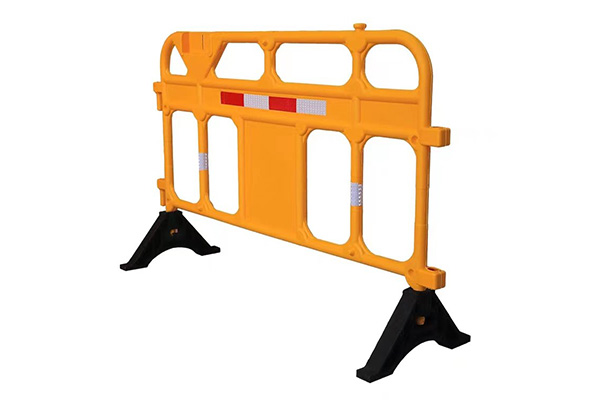
Construction site barriers are temporary or permanent physical barriers used to control access and improve safety around construction areas. They create clear boundaries between active work zones and surrounding environments, helping prevent unauthorized entry and reducing the risk of accidents.
Depending on the project requirements, construction barriers can be made from plastic, steel, concrete, metal mesh, or other durable materials.
Some barriers are designed primarily for pedestrian protection and crowd control, while others provide vehicle impact resistance or secure restricted construction areas.
Common functions of construction site barriers include:
- Access Control: Prevent unauthorized people from entering dangerous construction zones.
- Pedestrian Protection: Separate pedestrians from construction activities, machinery, and moving vehicles.
- Traffic Management: Direct vehicle movement and clearly mark temporary road closures or work zones.
- Hazard Identification: Make dangerous areas more visible through bright colors, reflective materials, and warning signs.
- Site Security: Protect construction equipment, materials, and work areas from unauthorized access.
- Work Zone Separation: Establish clear boundaries between different construction activities.
In short, construction site barriers are essential safety equipment for maintaining an organized and controlled working environment.
Types of Construction Site Barriers
Different construction projects require different levels of protection. Choosing the right barrier depends on factors such as site conditions, traffic volume, safety requirements, and project duration.
Here are some of the most common types of construction site barriers.
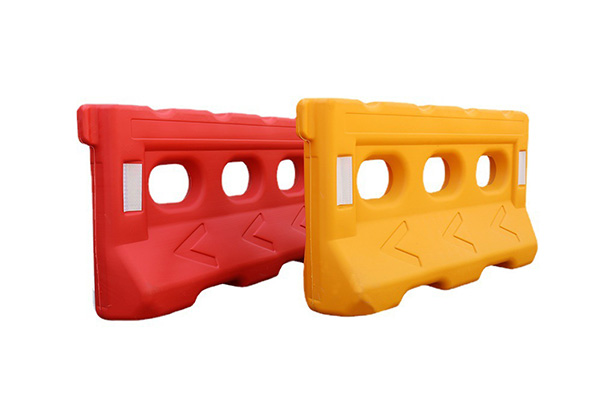
1. Plastic Water-Filled Barriers
Plastic water-filled barriers are widely used for road construction, traffic management, and temporary work zone separation.
These barriers are typically manufactured from high-density polyethylene (HDPE) or other durable plastics. They feature hollow internal chambers that can be filled with water or, where permitted by the manufacturer, other ballast materials to increase stability.
Key Features:
- Lightweight and easy to transport when empty.
- Quick to install and reposition.
- Interlocking designs for continuous barrier lines.
- High-visibility colors such as red, white, and orange.
- Suitable for temporary traffic control applications.
Water-filled barriers are particularly useful for highway maintenance, road construction, parking lot management, and temporary traffic diversions.
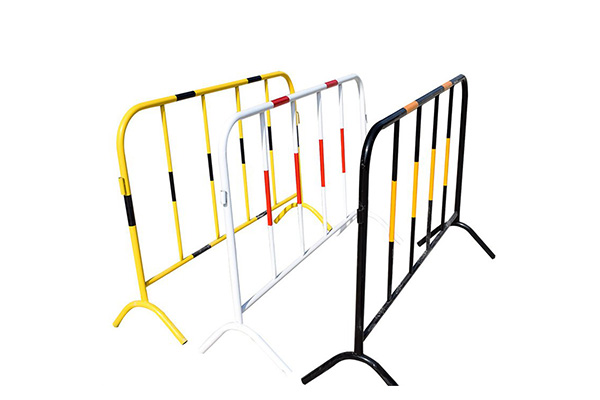
2. Steel Construction Barriers
Steel barriers provide a durable solution for restricting access to construction areas and separating pedestrian routes from work zones.
They are commonly manufactured using galvanized steel tubes, welded mesh panels, or other steel components. Depending on their design, they can be connected to create continuous temporary fencing systems.
Key Features:
- Strong and durable construction.
- Resistant to harsh outdoor conditions when properly treated.
- Reusable across multiple construction projects.
- Suitable for securing restricted areas.
- Available in different heights and configurations.
Steel construction barriers are commonly used around building sites, industrial facilities, infrastructure projects, and temporary pedestrian routes.
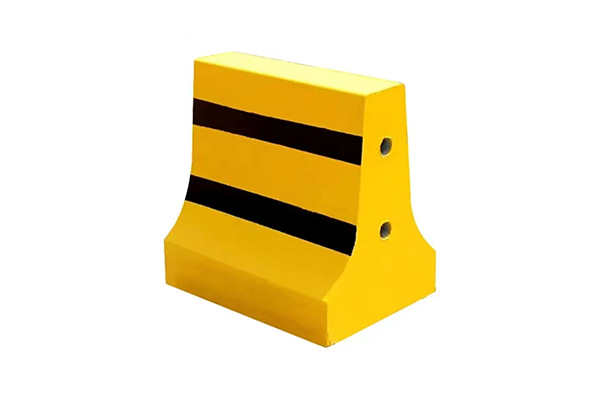
3. Concrete Barriers
Concrete barriers are heavy-duty structures designed to provide physical separation and, when properly engineered and installed, vehicle impact protection.
They are frequently used in highway construction, bridge projects, road maintenance, and other infrastructure developments where stronger protection is required.
Key Features:
- High structural strength and weight.
- Effective physical separation.
- Suitable for long-term outdoor applications.
- Available in different profiles and dimensions.
- Can provide vehicle containment when designed and tested for the intended application.
Concrete barriers are often selected for high-risk work zones where ordinary lightweight barriers cannot provide sufficient protection.
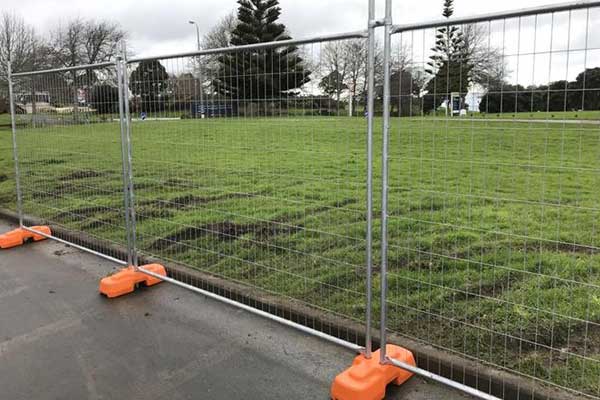
4. Temporary Construction Fencing
Temporary construction fencing is used to enclose construction sites and prevent unauthorized access.
It usually consists of metal mesh panels supported by movable feet or posts. Some systems also include privacy screens, gates, and additional security accessories.
Key Features:
- Easy installation and removal.
- Flexible panel configurations.
- Helps secure construction materials and equipment.
- Can be combined with warning signs and privacy screens.
- Reusable for different construction projects.
Temporary fencing is particularly suitable for building construction, demolition sites, residential developments, and large infrastructure projects.
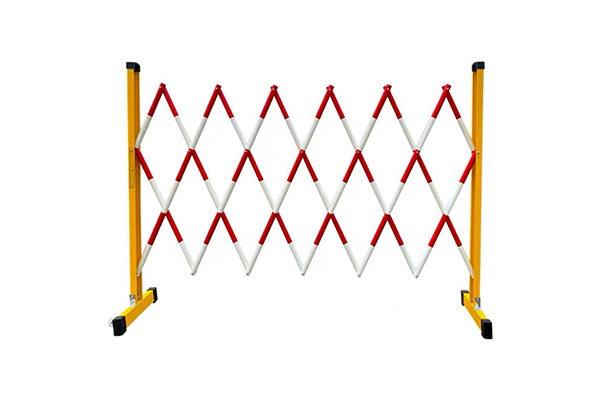
5. Pedestrian Barriers
Pedestrian barriers are designed to guide foot traffic and keep pedestrians away from hazardous construction activities.
They are commonly used around sidewalks, public spaces, roadworks, and building renovation projects.
Typical pedestrian barriers include steel crowd-control barriers, plastic pedestrian barriers, and interlocking temporary railing systems.
Key Features:
- Clearly defined pedestrian routes.
- Easy connection between individual units.
- Portable and reusable designs.
- High-visibility options.
- Suitable for temporary pedestrian management.
They are especially important when construction work takes place near public walkways or busy urban roads.
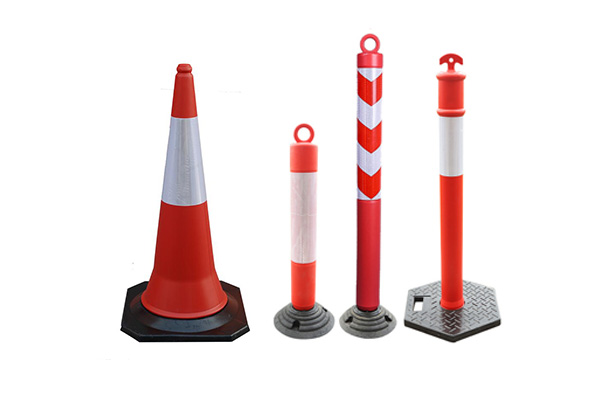
6. Traffic Cones and Delineators
Traffic cones and delineators are commonly used to mark temporary work zones, guide vehicles, and identify potential hazards.
Although they do not provide the same physical protection as heavy-duty barriers, they offer a flexible and cost-effective solution for temporary traffic management.
Key Features:
- Lightweight and portable.
- Easy to deploy and reposition.
- Bright colors for improved visibility.
- Available with reflective collars.
- Suitable for temporary traffic guidance.
They are often used alongside water-filled barriers, concrete barriers, and temporary fencing systems.
Benefits of Using Construction Site Barriers
Installing suitable construction site barriers offers several important advantages.
1. Improved Workplace Safety
Barriers create physical boundaries between hazardous activities and people who should not enter restricted areas. This helps reduce accidental access to dangerous zones.
2. Better Traffic Management
Road construction barriers help organize vehicle movement, indicate lane closures, and guide drivers around work zones.
3. Reduced Unauthorized Access
Temporary fencing and secure barrier systems help prevent unauthorized visitors from entering construction sites, reducing potential security risks.
4. Increased Visibility of Hazards
Bright colors, reflective strips, and warning signs make construction areas easier to identify, especially during nighttime or poor weather conditions.
5. Improved Site Organization
Clearly defined work zones make it easier to manage pedestrian routes, equipment movement, material storage, and construction activities.
6. Cost-Effective Reusability
Many temporary construction barriers are designed for repeated use. Portable and modular systems can be moved between projects, helping reduce long-term equipment costs.
Final Thoughts
Now that you understand what construction site barriers are, their different types, and how they are used, you can better determine which barrier solutions are suitable for your project. From temporary fencing and pedestrian barriers to water-filled and concrete barriers, each type serves a specific purpose in improving construction site safety and traffic management.
At Roadsky, we provide reliable road safety barrier and fencing solutions for various construction and infrastructure projects. Explore our safety barrier and fence products or contact us for a competitive quote.