

Do Not Enter Sign: Meaning, Shape and Uses
A Do Not Enter sign is one of the most recognizable traffic signs used to prevent vehicles from entering restricted roads, lanes, driveways, and other prohibited areas. Designed to communicate a clear prohibition, this sign helps reduce head-on collisions, wrong-way driving, traffic conflicts, and unauthorized vehicle access.
What is a Do Not Enter Sign?
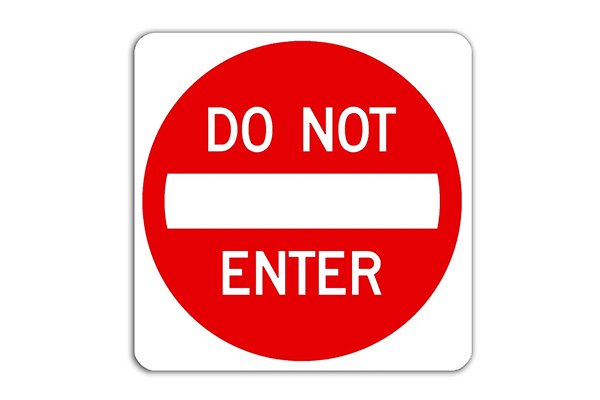
A do not enter sign is a regulatory traffic sign that prohibits vehicles from entering a specific road, lane, entrance, or designated area. It is commonly designed with a red circular background, a white horizontal bar across the center, and a white border, making it highly recognizable to drivers.
The sign indicates that vehicle entry from a particular direction is prohibited. It is often installed at road entrances, one-way street exits, ramps, and access points where entering traffic could create dangerous situations.
Unlike warning signs that alert drivers to potential hazards, a do not enter traffic sign communicates a direct instruction that drivers must follow.
What Does a Do Not Enter Sign Mean?
The meaning of a do not enter sign is simple: vehicles are not permitted to enter beyond the point where the sign is displayed from the indicated direction.
Drivers encountering this sign should stop if necessary, avoid entering the restricted area, and find an alternative route.
Do not enter signs are commonly used to:
- Prevent vehicles from entering one-way roads from the wrong direction.
- Restrict access to highway exit ramps.
- Keep traffic out of closed roads or restricted lanes.
- Prevent unauthorized vehicles from entering private or controlled-access areas.
- Reduce the risk of vehicle conflicts and traffic accidents.
- Improve traffic circulation in parking lots and commercial facilities.
The sign is especially important at locations where drivers might mistakenly enter a road in the wrong direction, creating a risk of serious collisions.
What Does a Do Not Enter Sign Look Like?
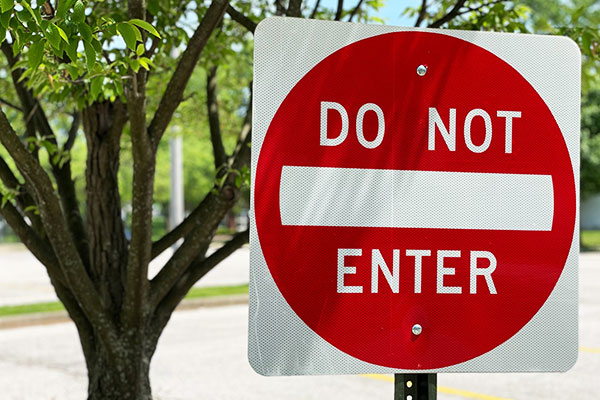
The standard do not enter sign typically features the following design elements:
- Red circular background: Provides strong visual contrast and communicates prohibition.
- White horizontal bar: Positioned across the center of the red circle.
- White border: Helps define the sign’s shape and improve visibility.
Its simple design makes it recognizable across many road environments and helps drivers understand the restriction without needing to read text.
Common Applications of Do Not Enter Signs
Do not enter signs are used in various traffic management and access control applications, from public road networks to private properties.
1. One-Way Roads
Do not enter signs are frequently installed at the exit end of one-way streets to prevent vehicles from entering in the wrong direction. They help reinforce one-way traffic regulations and reduce the risk of head-on collisions.
2. Highway Exit Ramps
At highway exits and interchange ramps, do not enter signs warn drivers against entering ramps from the wrong direction. Proper sign placement is particularly important at locations where entrance and exit ramps are close together.
3. Construction and Roadwork Areas
During road construction, maintenance, or temporary traffic changes, do not enter signs can be used to block vehicle access to closed roads, lanes, or work areas.
Temporary restrictions may help protect construction workers, road maintenance crews, and motorists from potential hazards.
4. Parking Lots and Commercial Properties
Shopping centers, warehouses, factories, office buildings, and parking facilities use do not enter signs to manage traffic movement and prevent vehicles from entering restricted lanes or exits.
5. Private Roads and Restricted Access Areas
Private property owners and facility managers use do not enter signs to control vehicle access to restricted areas, including service roads, loading zones, gated facilities, and security-sensitive locations.
Do Not Enter Sign Sizes
The appropriate size of a do not enter sign depends on the speed of approaching traffic, viewing distance, road conditions, installation location, and applicable traffic regulations.
Common sign diameters may include:
- 12 inches (300 mm): Private roads, parking facilities, and low-speed areas, where permitted.
- 18 inches (450 mm): Local streets and some restricted access applications.
- 24 inches (600 mm): Common road applications with moderate traffic speeds.
- 30 inches (750 mm) or larger: Higher-speed roads or locations requiring increased visibility.
These sizes are general examples, not universal standards. Always verify local road signage requirements before selecting a sign size for public roads.
Do Not Enter Sign vs. No Entry Sign
Although the terms “Do Not Enter” and “No Entry” are often used interchangeably, their wording and official usage may differ depending on the country and traffic regulations.
| Feature | Do Not Enter Sign | No Entry Sign |
|---|---|---|
| Meaning | Prohibits entry from the indicated direction | Prohibits entry into a restricted area or road |
| Common use | One-way roads, ramps, entrances | Restricted roads, access points |
| Design | Usually red circle with white horizontal bar | Often the same or a jurisdiction-specific design |
| Purpose | Prevent wrong-way vehicle entry | Restrict vehicle access |
In many locations, both terms describe the same or very similar regulatory sign. The correct sign design should follow the applicable local standards.
Why Do Not Enter Signs Are Important for Road Safety
Do not enter signs are an essential part of traffic control because they provide clear instructions to road users and help prevent dangerous driving behavior.
Their major benefits include:
- Preventing wrong-way driving: Discourages drivers from entering one-way roads and exit ramps from the wrong direction.
- Reducing collision risks: Helps minimize head-on conflicts and other traffic hazards.
- Improving traffic flow: Supports organized vehicle movement at intersections and road entrances.
- Protecting restricted areas: Helps keep unauthorized vehicles away from construction sites, private roads, and controlled-access facilities.
- Enhancing nighttime safety: Reflective materials improve visibility when illuminated by headlights.
When combined with proper road layout, pavement markings, directional signs, and traffic control measures, do not enter signs contribute to a safer and more efficient transportation environment.
Final Thoughts
Do not enter signs play an important role in preventing unauthorized access and improving road safety. Choosing high-quality signs with durable materials and reliable visibility helps ensure effective traffic control across various applications.