

How to Use Wheel Chocks: A Comprehensive Guide
Wheel chocks are simple but essential safety devices designed to prevent vehicles, trailers, and heavy equipment from moving unintentionally. They are commonly used with trucks, trailers, buses, construction equipment, forklifts, and other vehicles that may roll when parked.
Knowing how to use wheel chocks correctly is important for preventing accidents, protecting equipment, and improving workplace safety.
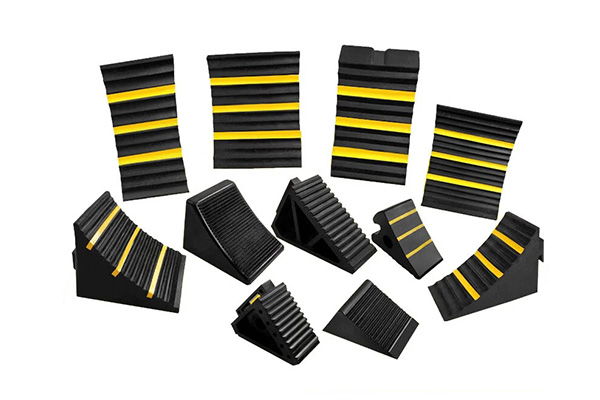
What Are Wheel Chocks?
Wheel chocks are wedge-shaped devices placed against a vehicle’s tires to help prevent unwanted movement. They work by creating a physical barrier between the tire and the ground.
Wheel chocks are available in different materials and sizes, including:
- Rubber wheel chocks
- Polyurethane or plastic wheel chocks
- Steel wheel chocks
- Aluminum wheel chocks
- Heavy-duty wheel chocks for trucks and construction equipment
The correct wheel chock depends on the vehicle’s weight, tire size, ground conditions, and application.
When Should You Use Wheel Chocks?
Wheel chocks should be used whenever there is a risk that a parked vehicle could move unintentionally.
Common applications include:
- Parking trucks and trailers on slopes
- Loading and unloading trailers
- Securing construction equipment
- Parking buses and commercial vehicles
- Preventing forklifts and industrial equipment from moving
- Securing vehicles during maintenance
- Stabilizing trailers when disconnected from a towing vehicle
Wheel chocks are especially important on inclined surfaces, where the force of gravity can cause a vehicle to roll.
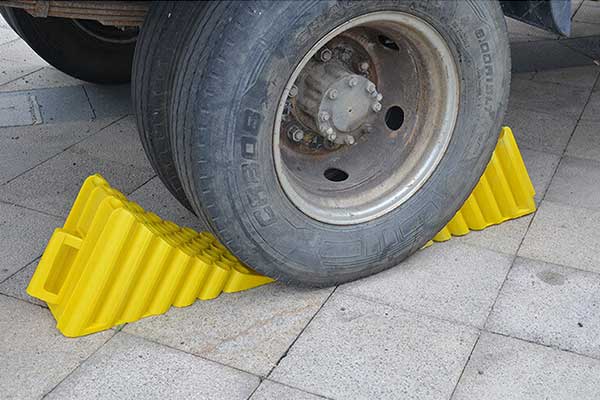
How to Use Wheel Chocks Correctly
Follow these basic steps when using wheel chocks.
1. Park the Vehicle Safely
Before installing the wheel chocks, park the vehicle in the designated location. Whenever possible, choose a firm, level surface.
Apply the vehicle’s parking brake before placing the chocks. Wheel chocks should be considered an additional safety measure, not a replacement for the parking brake.
2. Select the Correct Wheel Chocks
Choose chocks that are suitable for the vehicle’s weight and tire size.
For example, a lightweight plastic chock may be appropriate for a small trailer, while a heavy-duty truck or construction machine requires substantially stronger chocks.
Check the manufacturer’s specifications for the recommended vehicle weight and tire dimensions.
3. Position the Chocks Against the Tires
Place the wheel chock tightly against the tire so there is minimal space between the chock and the tire.
The chock should sit firmly on the ground with its sloped surface facing the tire.
For a vehicle parked on a slope, the chocks should be positioned on the downhill side of the wheels to help prevent the vehicle from rolling downhill.
4. Chock the Appropriate Wheels
The number and location of chocks depend on the vehicle and operating conditions.
For trailers, chocks are commonly placed on both sides of the wheels when additional security is required. Using chocks on both sides can help prevent movement in either direction.
For larger vehicles, follow the vehicle manufacturer’s recommendations and applicable workplace safety procedures.
5. Check the Chocks
After positioning the chocks, visually inspect them to make sure they are firmly contacting the tires and are sitting securely on the ground.
If necessary, gently confirm that the tire is firmly against the chock before beginning loading, unloading, maintenance, or other work.
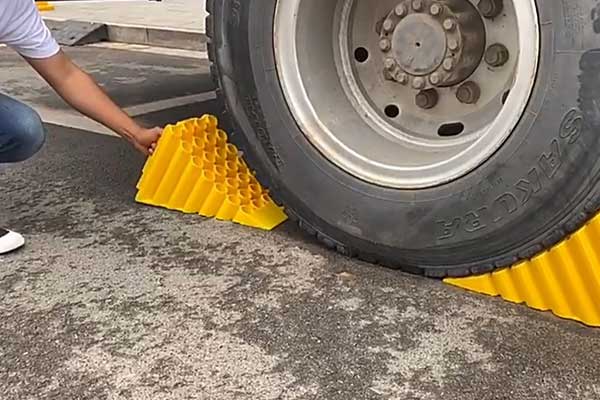
How to Remove Wheel Chocks Safely
Wheel chocks should only be removed when it is safe for the vehicle to move.
Before removing them:
- Make sure loading, unloading, maintenance, or other work is complete.
- Ensure everyone is clear of the vehicle.
- Start or connect the vehicle as required.
- Keep the parking brake engaged until you are ready to move.
- Remove the chocks from a safe position.
- Store the chocks where they will be readily available for the next use.
Never place yourself directly in the path of a potentially moving vehicle while installing or removing wheel chocks.
How Many Wheel Chocks Do You Need?
The required number of wheel chocks depends on the vehicle, terrain, and safety requirements.
For many applications, two chocks are used, with one positioned at each side of a wheel or wheel set. However, certain vehicles and working conditions may require additional chocks.
For commercial trucks, trailers, and heavy equipment, always follow applicable regulations, company safety procedures, and manufacturer recommendations rather than relying on a universal number.
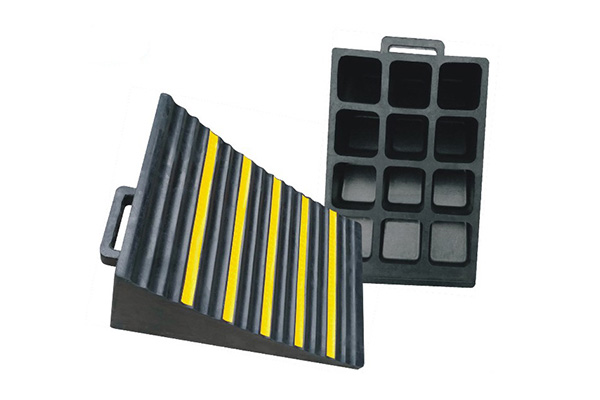
Choosing the Right Wheel Chock
When selecting wheel chocks, consider the following factors.
1. Vehicle Weight
The heavier the vehicle, the stronger the wheel chock needs to be. Heavy-duty equipment requires chocks with sufficient strength and load capacity to resist vehicle movement.
2. Tire Size
The chock should be appropriately sized for the tire. A chock that is too small may not provide adequate contact or restraint.
3. Ground Conditions
Consider where the chocks will be used. Rubber and other high-friction materials can provide good grip on many surfaces, while specialized designs may be better suited to gravel, concrete, asphalt, or industrial environments.
4. Material
Common materials include rubber, plastic, polyurethane, steel, and aluminum.
Rubber chocks are popular because they provide good traction and are relatively durable. Plastic and polyurethane options can offer a lightweight alternative, while metal chocks are often selected for demanding heavy-duty applications.
Common Wheel Chock Mistakes to Avoid
Even a high-quality wheel chock may be ineffective if it is used incorrectly.
Avoid these common mistakes:
- Using an undersized chock: A chock that is not designed for the vehicle may fail to provide adequate restraint.
- Leaving a large gap between the tire and chock: The chock should be positioned securely against the tire.
- Using damaged chocks: Cracks, deformation, excessive wear, or other damage can reduce performance.
- Relying only on wheel chocks: Chocks are a secondary safety measure and should be used together with the vehicle’s parking brake and other required safety procedures.
- Using unsuitable chocks on steep slopes: Extreme conditions may require additional controls or procedures beyond standard wheel chocking.
- Failing to inspect the ground: Loose gravel, mud, ice, or other unstable surfaces can reduce chock effectiveness.
Wheel Chock Safety Tips
For safer and more reliable use:
- Inspect wheel chocks regularly for damage and wear.
- Use the correct chock size for the tire and vehicle.
- Place chocks firmly against the tires.
- Use appropriate chocking procedures on slopes.
- Do not use damaged or cracked chocks.
- Keep chocks clean and free from excessive oil or debris.
- Store chocks in an accessible location.
- Follow applicable workplace and vehicle safety regulations.
- Use wheel chocks together with the parking brake and other required safety measures.
Conclusion
Learning how to use wheel chocks correctly is a straightforward but important part of vehicle and workplace safety. The basic process is to park securely, apply the parking brake, select appropriately sized chocks, position them firmly against the tires, and verify that the vehicle cannot move unintentionally.
For trucks, trailers, construction machinery, and other heavy equipment, selecting the right wheel chock is particularly important. The correct combination of chock size, material, design, and placement can provide an additional layer of protection against unexpected vehicle movement.