

Street Light Pole Specification: A Comprehensive Guide
Street light poles are essential infrastructure components used in highways, urban roads, residential areas, parking lots, and public spaces. Selecting the right street light pole specifications is critical to ensure safety, durability, lighting performance, and long-term cost efficiency.
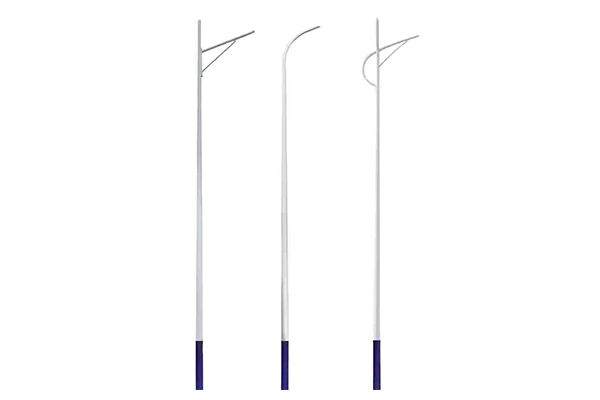
Street Light Pole Specifications Explained
Street light pole specifications refer to the technical requirements that define the structure, performance, and quality standards of a lighting pole. These specifications usually include:
- Pole height
- Material and thickness
- Pole shape and design
- Base plate dimensions
- Wind load resistance
- Surface treatment
- Lighting arm configuration
- Foundation requirements
- Applicable standards
Different applications require different specifications. For example, highway lighting poles need higher strength and wind resistance compared with residential street lighting poles.
Street Light Pole Height Specifications
The pole height is one of the most important factors affecting lighting coverage and installation cost.
Common street light pole heights include:
| Application | Recommended Pole Height |
|---|---|
| Residential streets | 3m – 6m |
| Urban roads | 6m – 10m |
| Main roads | 10m – 12m |
| Highways | 12m – 15m |
| Airport and large areas | 15m – 30m |
Factors affecting pole height selection:
- Road width
- Lighting spacing distance
- Required illumination level
- Traffic conditions
- LED lamp power
- Local lighting standards
For example, a 12-meter street light pole is commonly used on highways because it provides wider illumination coverage and reduces the number of poles required.
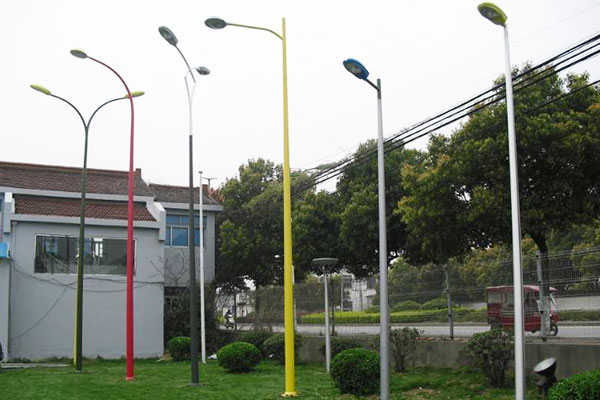
Street Light Pole Material Specifications
Most street light poles are manufactured from steel, aluminum, or galvanized iron.
1. Steel Street Light Poles
Steel is the most widely used material because of its high strength and affordability.
Typical specifications:
- Material: Q235 or Q355 steel
- Thickness: 3mm – 8mm
- Shape: Octagonal, conical, or round
- Surface: Hot-dip galvanized or powder coated
Advantages:
- High load-bearing capacity
- Suitable for harsh environments
- Cost-effective
- Long service life
2. Aluminum Street Light Poles
Aluminum poles are lightweight and corrosion-resistant.
Advantages:
- Excellent corrosion resistance
- Easy transportation and installation
- Attractive appearance
They are commonly used in:
- Parks
- Residential areas
- Coastal regions
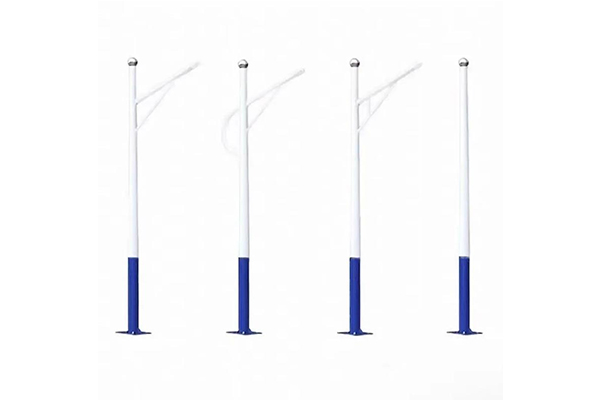
Street Light Pole Shape Specifications
Street light poles are available in different shapes depending on design requirements.
1. Conical Street Light Pole
A conical pole gradually reduces in diameter from bottom to top.
Features:
- Better wind resistance
- Modern appearance
- Lower material consumption
This is the most common design for highway and urban lighting.
2. Octagonal Street Light Pole
Octagonal poles are formed by bending steel plates into an eight-sided structure.
Advantages:
- Strong structural performance
- Easy manufacturing
- Widely used worldwide
Applications:
- Roads
- Highways
- Parking lots
3. Round Street Light Pole
Round poles have a simple cylindrical design.
Advantages:
- Simple appearance
- Lower production cost
- Easy installation
Street Light Pole Thickness Specifications
Pole thickness determines strength and durability.
Typical thickness ranges:
| Pole Height | Steel Thickness |
|---|---|
| 3m – 6m | 3mm – 4mm |
| 8m – 10m | 4mm – 5mm |
| 12m – 15m | 5mm – 8mm |
The required thickness depends on:
- Wind speed
- Pole height
- Lamp weight
- Installation location
- Safety factor requirements
For areas with strong winds or typhoons, thicker steel plates and stronger foundations are required.
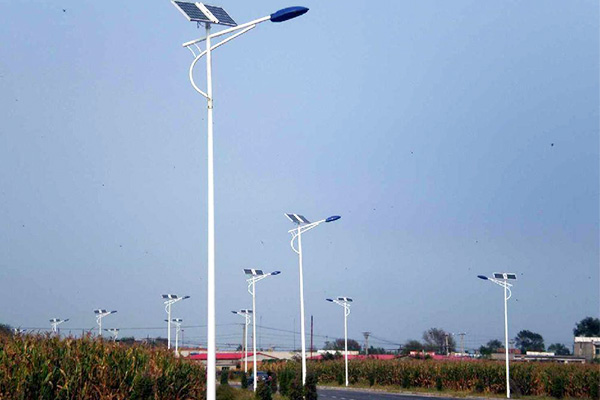
Street Light Pole Wind Load Specifications
Wind resistance is a critical safety requirement for street lighting poles.
Wind load calculations consider:
- Local maximum wind speed
- Pole height
- Pole diameter
- Lamp size
- Wind pressure coefficient
- Installation location
Typical wind resistance requirements:
- Standard areas: 30-40 m/s wind speed
- Coastal areas: 45-60 m/s wind speed
- Typhoon regions: higher requirements
A properly designed street light pole should withstand local extreme weather conditions without deformation or failure.
Street Light Pole Surface Treatment Specifications
Since street light poles are installed outdoors, corrosion protection is essential.
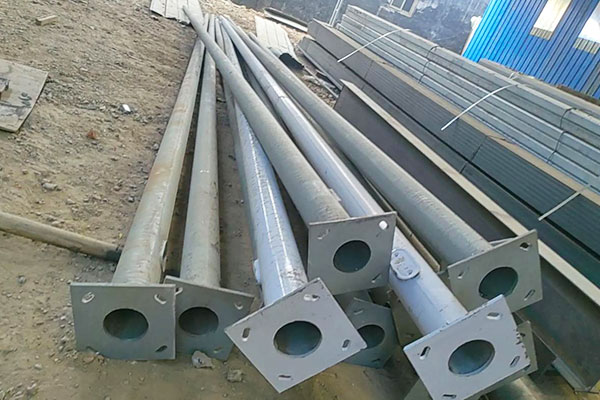
1. Hot-Dip Galvanizing
Hot-dip galvanizing is the most common protection method.
Typical specifications:
- Zinc coating thickness: 70-100 μm
- Service life: 20-30 years depending on environment
Advantages:
- Excellent corrosion resistance
- Suitable for outdoor use
- Low maintenance
2. Powder Coating
Powder coating provides additional protection and aesthetic value.
Common colors:
- Gray
- Black
- White
- Green
It is often combined with galvanization for premium street lighting projects.
Street Light Pole Arm Specifications
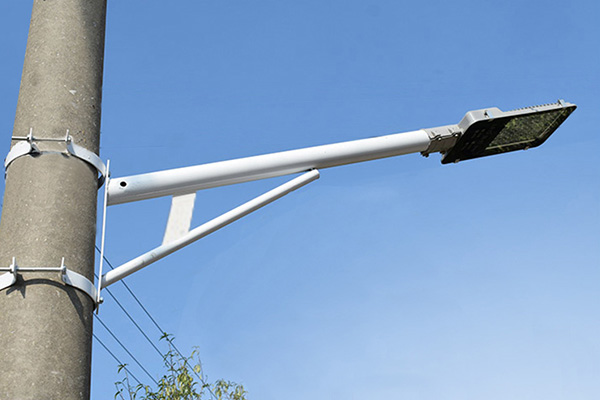
The light arm supports the LED fixture and determines the light distribution angle.
Common arm types:
1. Single Arm Pole
Used for:
- Residential roads
- Small streets
- Pedestrian areas
2. Double Arm Pole
Used for:
- Wide roads
- Highways
- Major intersections
Common arm lengths:
- 1m
- 1.5m
- 2m
- 3m
The arm angle is usually between 5° and 15° depending on the lighting design.
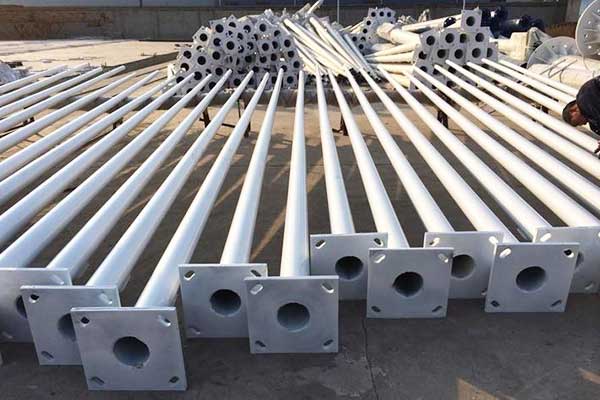
Street Light Pole Base Plate Specifications
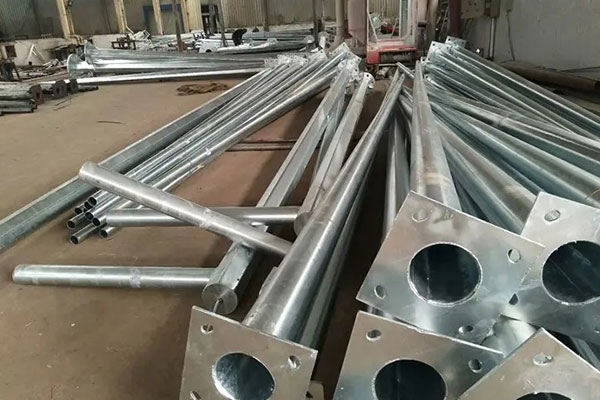
The base plate connects the pole to the concrete foundation.
Typical specifications include:
- Base plate thickness: 16mm – 30mm
- Bolt holes: 4 or 6 holes
- Anchor bolt size: M16 – M30
Example:
A 10-meter street light pole may require:
- Base plate: 350mm × 350mm
- Thickness: 20mm
- Anchor bolts: M24
The exact dimensions depend on structural calculations.
Street Light Pole Foundation Requirements
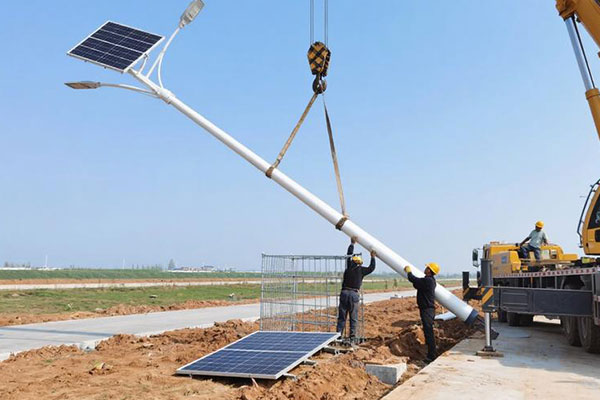
A strong foundation ensures stability and safety.
Foundation specifications usually include:
- Concrete grade
- Foundation size
- Anchor bolt arrangement
- Soil condition
Typical foundation depth:
- Small poles: 0.8m – 1.2m
- Medium poles: 1.2m – 2m
- High mast poles: 2m+
Soil conditions and wind loads should always be considered.
Common Street Light Pole Standards
Quality street light poles should comply with international standards such as:
- ASTM A123 — Hot-dip galvanizing requirements
- EN 40 — Lighting columns standard
- ISO 9001 — Quality management system
- IEC standards for lighting equipment
Project-specific requirements may also include local road authority standards.
How to Choose the Right Street Light Pole Specification?
When selecting a street light pole, consider:
1. Installation Location
Different environments require different materials and protection levels.
Examples:
- Coastal areas → galvanized steel or aluminum poles
- Highways → high-strength steel poles
- Parks → decorative aluminum poles
2. Lighting Requirements
Consider:
- LED lamp wattage
- Required illumination area
- Pole spacing
3. Weather Conditions
Check:
- Maximum wind speed
- Temperature range
- Corrosion environment
4. Maintenance Requirements
A quality pole should provide:
- Long service life
- Easy lamp replacement
- Minimal maintenance
Conclusion
Understanding street light pole specifications helps engineers, contractors, and buyers select the right lighting solution for different applications. Important factors such as pole height, material, thickness, wind resistance, galvanization, and foundation design directly affect performance and durability.
Choosing the correct street light pole specification ensures safer roads, better illumination, and long-term value for any lighting project.