

How Deep to Bury Underground Warning Tape?
When installing underground utilities such as electrical cables, gas lines, water pipes, or fiber optic cables, underground warning tape plays a crucial role in safety and damage prevention. The correct burial depth of warning tape ensures that anyone excavating in the future receives an early visual warning before reaching the buried line. But how deep should you bury underground warning tape? Let’s explore the standard practices, regulations, and best methods.

What is Underground Warning Tape?
Underground warning tape—also known as detectable or non-detectable warning tape—is a brightly colored plastic tape placed above buried utilities. It serves as a visual warning to excavators that a utility line lies below, preventing costly damage, service disruption, or serious injury.
There are two main types:
- Non-detectable warning tape: Made from polyethylene, used for shallow installations where detection equipment is unnecessary.
- Detectable warning tape: Contains a metallic foil layer, allowing it to be traced using a locator, ideal for non-metallic utilities like plastic pipes.
Recommended Depth for Underground Warning Tape
The depth at which you bury underground warning tape depends on the type of utility, local regulations, and soil conditions. However, the general guideline is:
| Utility Type | Typical Utility Depth | Recommended Tape Depth (Above Utility) |
|---|---|---|
| Electric power cables | 18–36 inches (450–900 mm) | 12 inches (300 mm) above cable |
| Gas lines | 24–36 inches (600–900 mm) | 12 inches (300 mm) above pipe |
| Water pipes | 24–48 inches (600–1200 mm) | 12 inches (300 mm) above pipe |
| Fiber optic / communication cables | 18–30 inches (450–750 mm) | 12 inches (300 mm) above cable |
In general:
Underground warning tape should be buried 12 inches (300 mm) above the utility line.
This placement ensures that if excavation occurs, the tape will be uncovered before the actual utility is reached, giving workers a chance to stop digging and assess.
Best Practices for Installing Underground Warning Tape
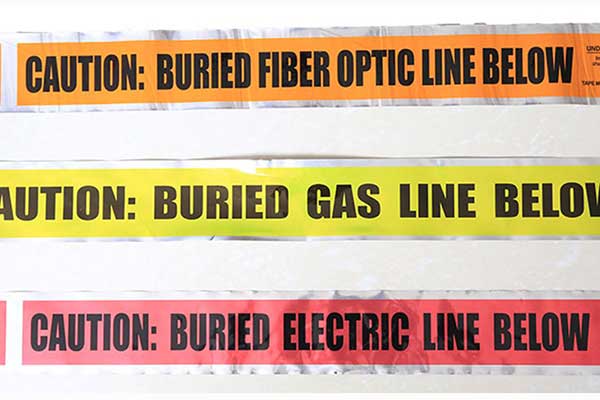
1. Follow color codes:
Use the correct color according to the utility type:
- Red – Electric power lines
- Yellow – Gas, oil, or steam
- Blue – Potable water
- Green – Sewer or drainage
- Orange – Communications or fiber optic
2. Maintain consistent depth:
Keep the tape parallel to the buried line at a uniform depth (typically 12 inches above). Avoid sagging or twisting.
3. Use detectable tape when needed:
For non-metallic pipes or cables, use detectable tape with a metallic foil to enable line tracing.
4. Avoid stretching:
Lay the tape flat without stretching it to prevent breakage or inaccurate placement.
5. Document installation:
Record the position and depth for future maintenance or reference.
Why Correct Depth Matters
Placing underground warning tape at the right depth ensures:
- Safety: Prevents injury and costly damage during excavation.
- Compliance: Meets utility and construction safety standards.
- Durability: Reduces exposure to environmental wear.
- Efficiency: Helps future excavators locate buried services quickly.
Conclusion
So, how deep should you bury underground warning tape? In most cases, 12 inches (300 mm) above the utility line is the correct and safe standard. Always confirm with local regulations and use color-coded, high-quality detectable tape for long-term reliability.
Proper installation of underground warning tape is a small step that delivers big safety benefits, protecting both your utilities and the people who work around them.