

What Are Expandable Barriers? Types, Uses, and Benefits
Expandable barriers are versatile crowd control and safety products designed to create temporary separation, restrict access, and guide pedestrian or vehicle movement in different environments. Unlike fixed barriers, expandable barriers can be easily extended, folded, moved, and stored, making them an efficient solution for locations that require flexible space management.
From airports and shopping malls to warehouses, construction sites, and public events, expandable barriers help improve safety, organization, and traffic flow. Their portability and adaptability make them a popular choice for both indoor and outdoor applications.
What is an Expandable Barrier?
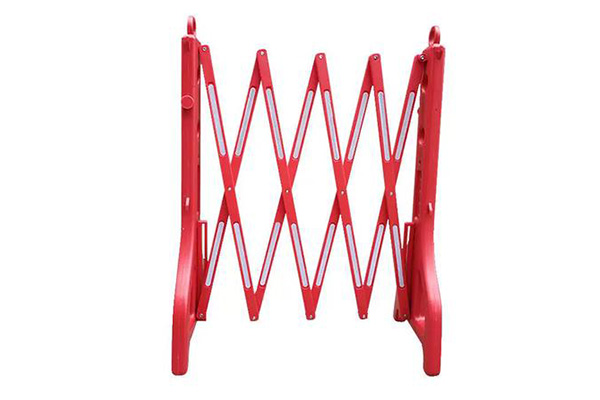
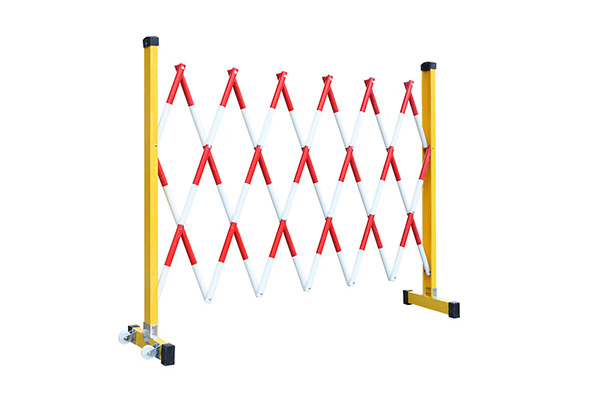
An expandable barrier is a portable safety barrier designed with a flexible folding structure that can extend and retract as needed. It is commonly made from interconnected metal sections, plastic components, or lightweight materials that allow the barrier to expand across a designated area and collapse into a compact size for transportation and storage.
Expandable barriers are also known as:
- Retractable barriers
- Folding barriers
- Accordion barriers
- Concertina barriers
- Portable safety barriers
They are widely used to create temporary boundaries, guide pedestrian traffic, block hazardous areas, and improve safety in crowded environments.
How Do Expandable Barriers Work?
Expandable barriers operate through a series of connected panels or joints that allow the structure to stretch and fold.
When extended, the barrier forms a stable physical separation between two areas. When not required, it can be compressed into a smaller size for easy movement and storage.
Most expandable barriers include:
- Flexible connecting joints: Allow the barrier to expand and collapse smoothly.
- Support feet or wheels: Improve stability and mobility.
- Locking mechanisms: Keep the barrier securely positioned.
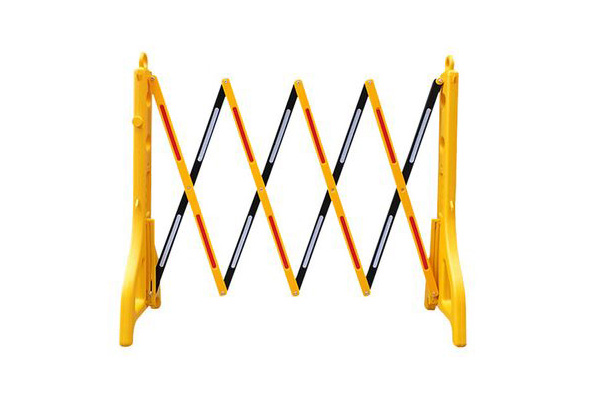
- High-visibility markings: Improve recognition in busy environments.
Some advanced models include reflective strips, warning signs, or safety colors to increase visibility in low-light conditions.
Types of Expandable Barriers
Expandable barriers are available in different designs depending on their intended application.
1. Metal Expandable Barriers
Metal expandable barriers are among the most durable options. They are usually manufactured from aluminum or steel and are designed for heavy-duty applications.
Features:
- Strong and impact-resistant
- Suitable for indoor and outdoor use
- Long service life
- Stable structure
2. Plastic Expandable Barriers
Plastic expandable barriers are lightweight and easy to handle. They are often used where frequent movement and quick setup are required.
Advantages:
- Lightweight design
- Corrosion-resistant
- Easy transportation
- Cost-effective
3. Wall-Mounted Expandable Barriers
Wall-mounted expandable barriers are fixed to a wall or another permanent structure and can be pulled out when needed.
They are ideal for locations where storage space is limited.
4. Wheeled Expandable Barriers
Wheeled models feature casters that allow operators to move large barriers with minimal effort.
They are particularly useful for:
- Large warehouses
- Airports
- Factories
- Transportation facilities
Common Applications of Expandable Barriers
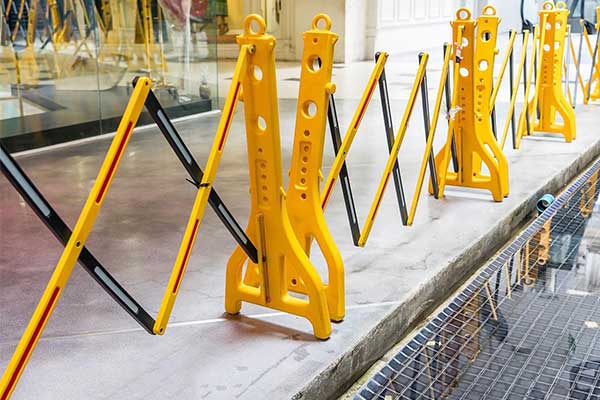
Expandable barriers are used across many industries because of their flexibility and convenience.
1. Crowd Control
One of the most common uses of expandable barriers is managing pedestrian flow.
They help create organized lines and waiting areas in:
- Airports
- Banks
- Ticket counters
- Stadiums
- Exhibition centers
By guiding people efficiently, expandable barriers reduce congestion and improve customer experience.
2. Construction and Maintenance Areas
Construction zones often contain temporary hazards such as open surfaces, equipment, and restricted work areas.
Expandable barriers provide a quick way to:
- Mark dangerous areas
- Prevent unauthorized entry
- Separate workers from pedestrians
- Improve site safety
3. Industrial Safety
Factories and warehouses use expandable barriers to control access around:
- Machinery
- Loading zones
- Maintenance areas
- Storage spaces
Their portability allows safety zones to be adjusted as operations change.
4. Retail and Commercial Facilities
Retail stores use expandable barriers to manage customer movement during:
- Sales events
- Store renovations
- Queue management
- Temporary closures
Their compact storage design makes them practical for businesses with changing layouts.
5. Emergency and Security Applications
Expandable barriers can quickly establish temporary safety zones during emergencies.
They are useful for:
- Accident scenes
- Fire protection areas
- Security checkpoints
- Evacuation routes
Key Benefits of Expandable Barriers
Easy Installation and Deployment
One of the biggest advantages of expandable barriers is their simple setup. They can be expanded and positioned within seconds without specialized tools.
Flexible and Adjustable
Expandable barriers can adapt to different spaces. Whether blocking a narrow doorway or covering a large open area, they provide excellent flexibility.
Space-Saving Design
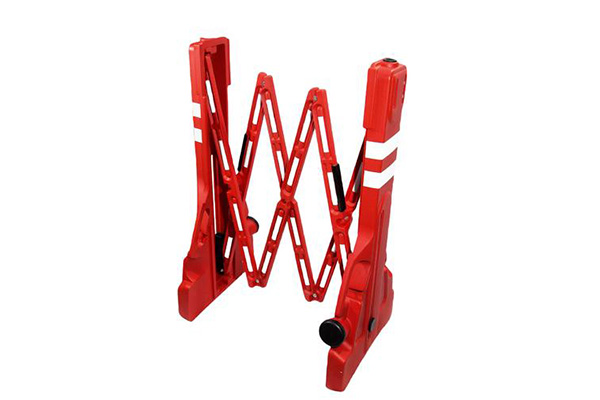
When not in use, expandable barriers can be folded into a compact form, reducing storage requirements.
Cost-Effective Safety Solution
Compared with permanent fencing systems, expandable barriers require less installation work and maintenance, making them an economical choice for temporary safety needs.
Improved Safety and Visibility
Many expandable barriers feature bright colors, reflective materials, and warning signs that make restricted areas easy to recognize.
Durable and Reusable
High-quality expandable barriers are designed for repeated use. Strong materials and reliable folding mechanisms allow them to perform well in different environments.
Factors to Consider When Choosing an Expandable Barrier
Before purchasing an expandable barrier, consider the following factors:
Material
Choose materials based on the environment:
- Steel or aluminum for heavy-duty use
- Plastic for lightweight applications
Length and Height
The barrier should match the size of the area that needs protection.
Mobility
For frequent relocation, choose models with wheels or lightweight designs.
Indoor or Outdoor Use
Outdoor environments require weather-resistant materials and stronger construction.
Visibility
High-visibility colors and reflective features are important for safety in busy areas.
Maintenance Tips for Expandable Barriers
Proper maintenance can extend service life:
- Clean surfaces regularly
- Check folding joints for damage
- Lubricate moving parts when necessary
- Inspect wheels and feet
- Store in a dry location when not in use
Conclusion
Expandable barriers are versatile safety and crowd management tools designed to provide quick, flexible, and effective area control. Their portable design, adjustable coverage, and ease of use make them suitable for industries ranging from transportation and construction to retail and public events.