

What is a Traffic Mirror? Everything You Need to Know
Blind spots are one of the biggest causes of accidents in parking lots, warehouses, driveways, and road intersections. Even experienced drivers can struggle to see around corners, especially when buildings, walls, fences, or parked vehicles block their view.
That’s where traffic mirrors come in. They provide a wider field of vision, helping drivers, cyclists, and pedestrians see approaching traffic before entering an intersection or turning a corner. Whether you’re managing a factory, commercial property, residential community, or public roadway, installing the right traffic mirror is a simple and cost-effective way to improve safety.
What is a Traffic Mirror?
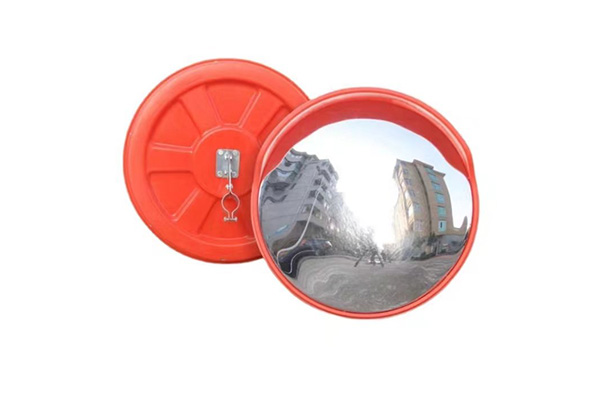
A traffic mirror, also called a convex traffic mirror, road safety mirror, or driveway mirror, is a specially designed convex mirror that expands the driver’s field of view.
Unlike a flat mirror, a convex mirror curves outward, allowing it to reflect a much larger area. Although objects appear smaller in the mirror, drivers can see vehicles, bicycles, pedestrians, and other obstacles that would otherwise remain hidden.
Traffic mirrors are commonly installed at:
- Blind road intersections
- Parking lot exits
- Residential driveways
- Warehouse aisles
- Factory corners
- Loading docks
- Shopping centers
- Schools and hospitals
- Underground parking garages
- Private roads
How Does a Traffic Mirror Work?
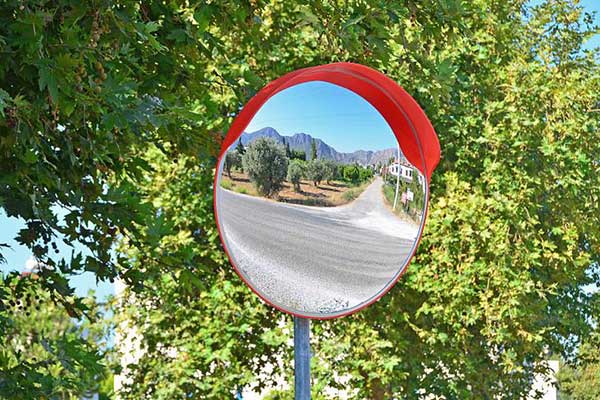
The curved surface of a convex mirror reflects light from multiple directions toward the viewer.
This wider viewing angle helps eliminate blind spots and gives drivers more time to react to approaching vehicles or pedestrians.
For example, when leaving a parking garage with limited visibility, a traffic mirror lets you see cars approaching from either side before pulling out.
Although objects appear farther away than they actually are, the mirror provides valuable advance warning that improves overall safety.
Benefits of Installing Traffic Mirrors
Traffic mirrors offer several practical advantages in both public and private environments.
- Improve Safety: The biggest benefit is reducing the risk of collisions caused by blind spots. Drivers can see approaching traffic earlier, allowing them to make safer decisions.
- Reduce Blind Spots: Convex mirrors provide a much wider viewing angle than standard mirrors, making hidden areas visible.
- Lower Accident Costs: Preventing even a single accident can save thousands of dollars in vehicle repairs, insurance claims, and property damage.
- Easy to Install: Most traffic mirrors come with adjustable mounting brackets that can be attached to poles or walls without complicated installation.
- Low Maintenance: High-quality mirrors require very little maintenance and can provide years of reliable performance.
- Suitable for Many Locations: Traffic mirrors are used in commercial, industrial, residential, and municipal projects around the world.
Types of Traffic Mirrors
Different applications require different mirror designs.
1. Outdoor Traffic Mirrors
These are built to withstand rain, sunlight, wind, snow, and temperature changes.
Common features include:
- UV-resistant materials
- Waterproof construction
- Anti-fading surface
- Rust-resistant brackets
They are ideal for roads, parking lots, and outdoor intersections.
3. Indoor Safety Mirrors
Indoor traffic mirrors are commonly installed in:
- Warehouses
- Manufacturing facilities
- Distribution centers
- Retail stores
- Parking garages
They help forklift operators and workers safely navigate around corners.
3. Driveway Mirrors
Driveway mirrors improve visibility when vehicles exit properties onto busy roads.
They are especially useful where fences, hedges, or buildings block the driver’s view.
4. Dome Mirrors
Unlike convex traffic mirrors mounted on walls, dome mirrors are usually suspended from ceilings.
They provide nearly 360-degree visibility and are often used in:
- Warehouses
- Retail stores
- Distribution centers
- Security monitoring
Common Traffic Mirror Materials
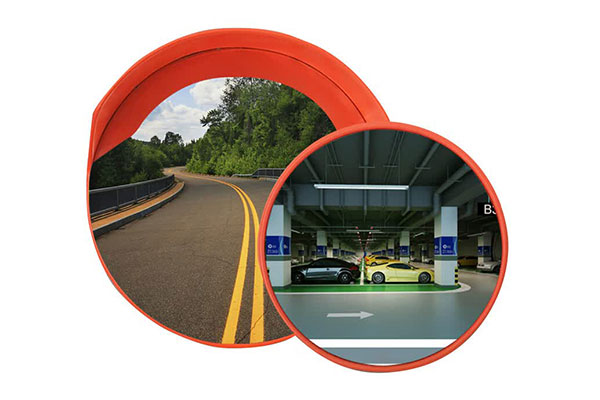
The mirror material affects durability, image clarity, and price.
| Material | Advantages | Best For |
|---|---|---|
| Acrylic | Lightweight, clear image, impact-resistant | Indoor use |
| Polycarbonate | Extremely durable, shatter-resistant | High-risk areas |
| Stainless Steel | Excellent weather resistance | Outdoor roads |
| Glass | High image clarity | Low-risk environments |
Polycarbonate and acrylic are generally preferred because they are safer and less likely to shatter if struck.
How to Choose the Right Traffic Mirror
Selecting the correct mirror depends on several factors.
1. Installation Location
Indoor and outdoor environments require different materials and weather resistance.
2. Mirror Size
Larger mirrors provide greater visibility over longer distances.
Typical sizes include:
- 300 mm
- 450 mm
- 600 mm
- 800 mm
- 1000 mm
The appropriate size depends on viewing distance and installation height.
3. Weather Conditions
For outdoor installations, choose mirrors with:
- UV protection
- Waterproof seals
- Corrosion-resistant hardware
- Wind-resistant brackets
4. Mounting Options
Traffic mirrors can be installed on:
- Steel poles
- Concrete poles
- Walls
- Fence posts
Adjustable brackets make it easy to set the correct viewing angle.
Where Are Traffic Mirrors Commonly Used?
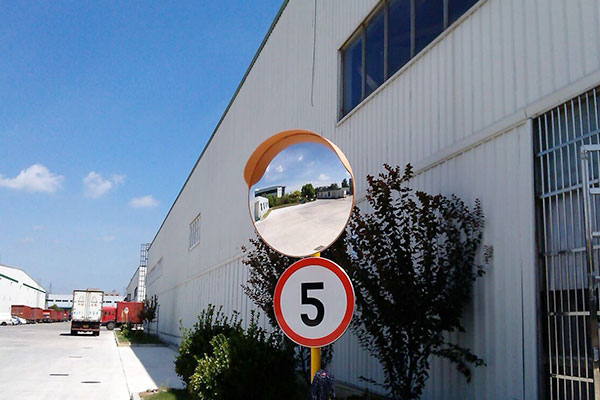
Traffic mirrors are widely used in both public and private spaces.
Typical applications include:
- Road intersections
- Parking garages
- Parking lot exits
- Residential communities
- Schools
- Hospitals
- Warehouses
- Industrial plants
- Logistics centers
- Loading docks
- Apartment complexes
- Gas stations
- Shopping malls
- Construction sites
Any location with limited visibility can benefit from installing a traffic mirror.
Traffic Mirror Maintenance Tips
Traffic mirrors require only minimal maintenance, but regular inspections help ensure they remain effective.
Recommended maintenance includes:
- Clean the mirror surface regularly to remove dust and dirt.
- Check mounting brackets for loose bolts.
- Inspect for cracks or impact damage.
- Replace faded or scratched mirrors if visibility is reduced.
- Trim nearby vegetation that may block the mirror’s view.
Frequently Asked Questions
The ideal size depends on the viewing distance and installation location. Smaller mirrors are suitable for indoor corners, while larger mirrors provide better visibility for road intersections and parking lot entrances.
Most outdoor traffic mirrors are designed to withstand rain, sunlight, wind, and temperature changes. Choosing UV-resistant materials and corrosion-resistant mounting hardware helps ensure long-term performance.
Yes. Most traffic mirrors include adjustable brackets that can be mounted on existing steel poles, walls, or other sturdy structures.
The recommended installation height depends on the location and viewing requirements. Generally, traffic mirrors should be mounted around 1.8 to 2.5 meters above the ground to provide a clear view while avoiding damage from vehicles or pedestrians.
For road applications, the mirror should be adjusted according to the driver’s eye level and traffic conditions.
A high-quality traffic mirror typically lasts 5–15 years, depending on the material, weather conditions, and maintenance. Acrylic mirrors usually last 5–10 years, while polycarbonate and stainless steel models can last 7–15 years or longer with proper care.
Conclusion
Traffic mirrors are a simple but highly effective way to reduce blind spots and improve safety in a wide variety of environments. From busy road intersections to warehouse aisles and residential driveways, they help drivers and pedestrians see hazards before they become accidents.
Looking for reliable traffic mirrors for your next safety project? Roadsky offers durable convex traffic mirrors for roads, parking lots, warehouses, and industrial applications. Contact us today for high-quality products, OEM solutions, and competitive prices from an experienced supplier.