

Rubber vs. Asphalt Speed Bump: Which Should You Choose?
Speed bumps are a simple, effective way to slow vehicles in parking lots, private roads, warehouses, residential communities, and school zones. However, the material you choose can affect installation time, long-term maintenance, appearance, and cost.
When comparing a rubber vs. asphalt speed bump, rubber is usually the more flexible and faster option, while asphalt is typically better for permanent installations. The right choice depends on traffic volume, vehicle types, weather conditions, budget, and whether the layout may change in the future.
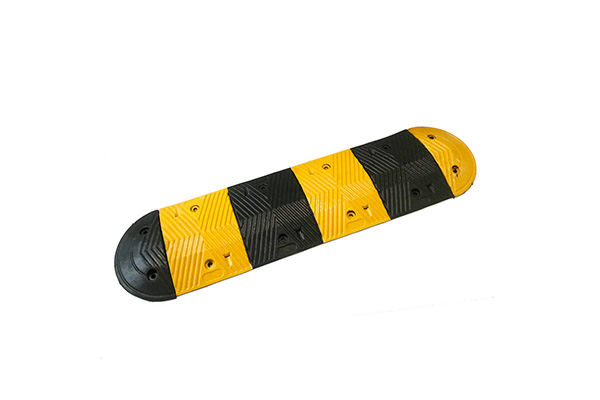
What is a Rubber Speed Bump?
A rubber speed bump is a prefabricated traffic-control product made from molded rubber or recycled rubber. Most systems use interlocking sections that are secured to asphalt or concrete with bolts or anchors.
Rubber speed bumps are common in parking lots, garages, loading areas, gated communities, and commercial properties. They are often available with bright yellow reflective panels or molded markings to improve visibility.
Advantages of Rubber Speed Bumps
Rubber speed bumps are popular because they are convenient and adaptable.
- Fast installation with limited disruption
- No need for hot asphalt or major paving work
- Easy to remove, replace, or relocate
- Individual damaged sections can be replaced
- High-visibility color options are widely available
For a property owner who needs to slow traffic quickly, a rubber speed bump is often the most practical choice.
Disadvantages of Rubber Speed Bumps
Rubber speed bumps may not be ideal for every environment. Heavy trucks, snowplows, frequent turning movements, and poor installation can cause sections or anchors to loosen over time.
They can also create noise if the modules shift or develop gaps. In harsh climates, expansion, contraction, and repeated freeze-thaw conditions may increase maintenance needs.
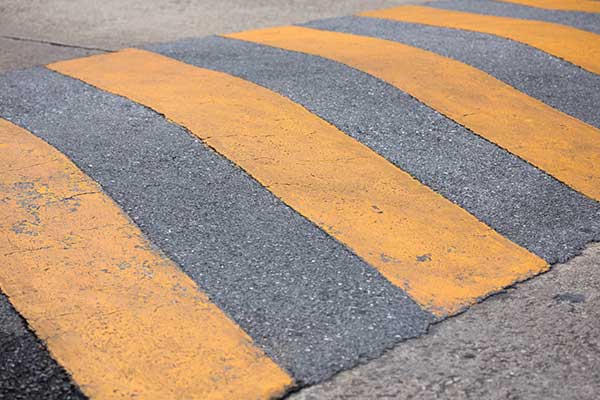
What is an Asphalt Speed Bump?
An asphalt speed bump is built directly into the pavement using hot-mix asphalt. Unlike a modular rubber system, it becomes part of the road surface.
Asphalt speed bumps are generally chosen for permanent traffic-calming projects. They provide a smoother, more integrated appearance and can be shaped to match site-specific requirements.
Advantages of Asphalt Speed Bumps
Asphalt speed bumps are a strong option when a site needs a long-term solution.
- Permanent, roadway-integrated construction
- Smooth transition when properly designed
- Professional appearance that blends with pavement
- No modular joints or exposed anchor points
- Well suited to projects already involving paving or resurfacing
- Can handle consistent traffic when built and maintained correctly
An asphalt speed bump can be especially cost-effective when installed during a larger pavement maintenance project.
Disadvantages of Asphalt Speed Bumps
The main drawback of asphalt is that it requires more planning and labor. Installation may involve traffic control, paving equipment, compaction, curing, striping, and warning signs.
Asphalt speed bumps are also difficult to remove. If a driveway, parking layout, or traffic pattern changes later, removal can require milling and pavement repair.
Over time, asphalt may crack or deteriorate, particularly where drainage is poor or where heavy vehicles use the road regularly.
Rubber vs. Asphalt Speed Bump: Quick Comparison
| Feature | Rubber Speed Bump | Asphalt Speed Bump |
|---|---|---|
| Installation | Fast, modular installation | Requires paving equipment and labor |
| Removal | Can usually be removed or relocated | Difficult and costly to remove |
| Upfront cost | Often lower for small projects | Usually higher |
| Durability | Good for low- to moderate-traffic areas | Strong option for permanent use |
| Maintenance | May need new anchors or replacement sections | May need patching or resurfacing |
| Appearance | Visible sections; often black and yellow | Blends into the roadway |
| Best for | Parking lots, private sites, temporary needs | Roads and long-term traffic-calming projects |
Installation: Rubber vs. Asphalt Speed Bump
Installation is one of the largest differences between the two options.
A rubber speed bump can often be installed in a few hours, depending on the size of the project and the condition of the pavement. The installer marks the location, assembles the modular sections, drills anchor holes, and secures the bump to the surface.
If minimizing disruption is a priority, rubber usually has the advantage.
Cost Considerations
Rubber speed bumps often cost less upfront for small projects because they require less labor and equipment. This makes them attractive for parking lots, private driveways, and sites with only one or two speed-control locations.
Asphalt speed bumps generally have a higher initial cost because professional paving work is required. However, their cost can make sense for permanent roads, especially when added to an existing resurfacing contract.
When evaluating price, consider the full lifecycle cost:
- Installation labor
- Signs and pavement markings
- Repairs and replacement parts
- Potential removal costs
- Expected vehicle traffic
- Future changes to the property layout
The cheapest initial option is not always the lowest-cost solution over several years.
Durability and Maintenance
A properly installed asphalt speed bump is generally the better choice for a long-term, fixed location. However, it still requires routine pavement maintenance. Cracks, edge wear, and drainage issues should be addressed early to prevent more extensive repairs.
Rubber speed bumps are easier to maintain because damaged modules can often be replaced individually. Their anchors should be inspected periodically, especially after severe weather, snow removal, or heavy vehicle traffic.
Which Option is Best for You?
Choose a rubber speed bump if you need:
- Quick installation
- Lower disruption to site operations
- A removable or relocatable solution
- High visibility in a parking lot or garage
Choose an asphalt speed bump if you need:
- A permanent traffic-control feature
- A smooth, integrated roadway appearance
- Installation during a paving or resurfacing project
- A solution for a stable road layout
Important Safety Considerations
Speed bumps should be clearly visible and appropriate for the road environment. Use warning signs, pavement markings, and reflective materials where needed. Placement should account for drainage, visibility, emergency access, pedestrians, bicyclists, and the types of vehicles using the road.
Before installation, check local requirements and consult a qualified traffic or pavement professional for public streets, emergency routes, and higher-traffic locations.
Conclusion
The best choice in the rubber vs. asphalt speed bump comparison depends on whether your priority is flexibility or permanence.
Rubber speed bumps are ideal for fast, practical, and adjustable traffic control. Asphalt speed bumps are better for permanent projects where a smooth finish and long-term roadway integration matter most.
If you are looking for a practical and flexible traffic-calming solution, RoadSky can provide rubber speed humps and other road safety products for different applications. Contact us to discuss your project requirements and find a suitable speed control solution.