

Solar Street Light Specification Guide: Key Parameters
Choosing a solar street light is not only about comparing wattage. Battery capacity, solar panel size, LED efficiency, working time, mounting height, and lighting control all affect how the system performs after installation.
For contractors, distributors, and project buyers, understanding these specifications makes it easier to compare different solar street light models and select the right configuration for a road, parking lot, residential area, or commercial project.
This solar street light specification guide explains the most important parameters and what they actually mean.
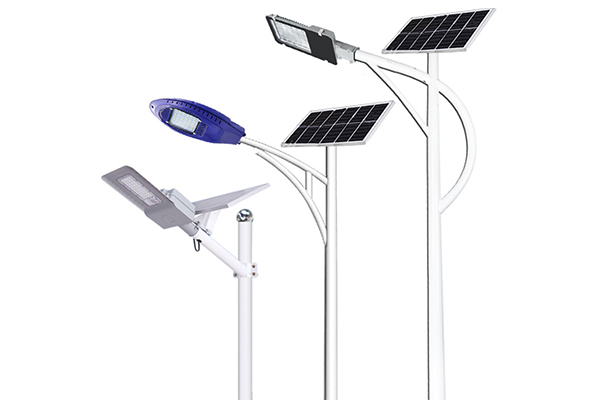
Main Solar Street Light Specifications
A typical solar street light specification sheet includes:
| Specification | Common Range |
|---|---|
| LED Power | 20W–200W+ |
| Solar Panel | 40W–300W+ |
| Battery | Lithium-ion / LiFePO4 |
| Battery Capacity | 20Ah–200Ah+ |
| Color Temperature | 3000K–6500K |
| Luminous Efficiency | 130–200 lm/W |
| Working Time | 10–12 hours/night |
| Backup Time | 2–5 rainy days |
| Installation Height | 3–12 m |
| IP Rating | IP65 / IP66 |
| Charging Time | Around 5–8 hours of effective sunlight |
| Control | Light sensor / timer / motion sensor / remote control |
Actual specifications vary according to lamp design, local solar conditions, required illumination, and working mode.
LED Power
LED power is usually one of the first specifications buyers check.
Common solar street light powers include:
- 20W–40W for pathways and small residential roads
- 50W–80W for community streets and parking areas
- 100W–150W for wider roads and commercial projects
- 150W–200W or higher for large-area lighting
However, higher wattage does not automatically mean better lighting.
Two 100W solar street lights may provide very different brightness levels because their LED chips, optical lenses, drivers, heat dissipation, and luminous efficiency are different. Therefore, LED wattage should always be considered together with lumen output.
Lumen Output and Luminous Efficiency
Lumen output describes how much visible light the lamp produces.
Luminous efficiency is normally expressed in lumens per watt (lm/W).
For example:
A 100W LED lamp with an efficiency of 150 lm/W can theoretically produce around:
100 × 150 = 15,000 lumens
A more efficient LED system can therefore provide higher brightness without significantly increasing power consumption.
For solar street lighting, good energy efficiency is especially important because all electricity must come from the solar panel and battery.
Modern solar street lights commonly use high-efficiency LED chips with approximately 130–200 lm/W, depending on the configuration.
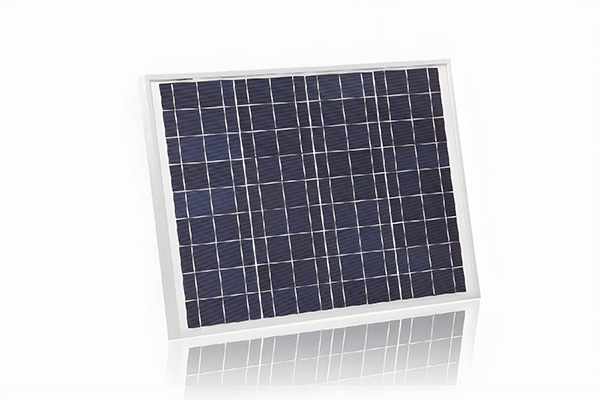
Solar Panel Power
The solar panel generates electricity during the daytime and charges the battery.
Its rated power is expressed in watts.
For example:
- 50W LED lamp may use an 80W–120W solar panel
- 100W LED lamp may require a 150W–200W panel
- Higher-power systems may use panels above 200W
The required panel size depends on more than lamp wattage.
Important factors include:
- daily working hours
- local peak sunlight hours
- battery capacity
- charging efficiency
- weather conditions
- seasonal sunlight variation
Areas with limited sunlight normally require a larger solar panel than regions with strong year-round solar radiation.
Battery Type
The battery stores electricity generated during the day and supplies the lamp at night.
Common solar street light battery types include lithium-ion and LiFePO4 batteries.
1. Lithium-Ion Battery
Lithium-ion batteries are compact and lightweight, making them commonly used in integrated solar street lights.
2. LiFePO4 Battery
Lithium iron phosphate, or LiFePO4, batteries are widely used in higher-quality solar street lighting systems because of their good cycle life, thermal stability, and deep-discharge performance.
For long-term outdoor projects, battery quality is often more important than simply choosing the largest advertised capacity.
Battery Capacity
Battery capacity is usually shown in amp-hours (Ah) or watt-hours (Wh).
When comparing batteries, Wh provides a more useful comparison than Ah alone because battery voltage also matters.
The formula is:
Battery Capacity (Wh) = Voltage × Ah
For example:
A 12.8V 50Ah battery provides approximately:
12.8 × 50 = 640Wh
A larger battery allows the lamp to operate longer and provides more backup energy during cloudy or rainy weather.
However, the battery must also be matched properly with the solar panel. Installing a very large battery with an undersized panel may result in insufficient charging.
Working Time and Rainy Day Backup
Most solar street lights are designed to operate for around 10–12 hours per night.
To save energy, many solar street lights use preset lighting modes during the night. For example, the lamp may operate at full brightness for the first few hours and then reduce the power later at night. This helps extend the working time and reduce battery consumption.
Many systems also provide around 2–5 rainy days of backup.
Projects in areas with frequent cloudy or rainy weather normally require larger batteries and solar panels.
Color Temperature
Solar street light color temperature is measured in Kelvin (K).
Common options include:
| Color Temperature | Light Appearance | Typical Application |
|---|---|---|
| 3000K | Warm white | Residential areas, parks |
| 4000K | Neutral white | Streets, communities |
| 5000K | Cool white | Roads, parking areas |
| 6000K–6500K | Daylight white | Industrial and high-visibility areas |
A color temperature around 4000K–5000K is commonly selected for road and outdoor lighting because it provides good visibility without appearing excessively blue.
Installation Height
The mounting height should be matched with LED power, road width, pole spacing, and required illumination.
Typical installation heights are:
| Installation Area | Approximate Pole Height |
|---|---|
| Garden / Pathway | 3–5 m |
| Residential Street | 5–7 m |
| Secondary Road | 6–9 m |
| Main Road | 8–12 m |
A higher pole does not automatically mean better coverage.
The LED lens and beam angle must also be selected correctly so that light is distributed across the required road area instead of being concentrated directly below the pole.
Pole Spacing and Lux Level
Solar street light spacing is commonly around 20–40 meters, but the correct spacing depends on the actual project.
Important factors include:
- pole height
- road width
- lumen output
- beam angle
- required lux level
- lamp arrangement
Lux measures how much light reaches the road surface.
For professional road projects, lighting performance should therefore be evaluated by both lux level and lighting uniformity, rather than wattage alone.
IP Rating
Because solar street lights are installed outdoors, waterproof and dust protection is important.
The most common ratings are:
- IP65: suitable for general outdoor use
- IP66: offers stronger protection against water and dust
For coastal, humid, or desert environments, buyers should also consider corrosion resistance and operating temperature.
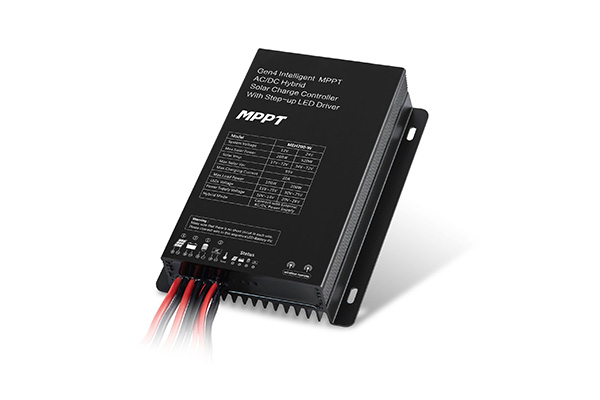
Solar Street Light Controller
The controller manages battery charging, discharging, and lighting schedules.
Depending on the system, it may support:
- dusk-to-dawn operation
- timer control
- multiple brightness periods
- motion sensing
- overcharge protection
- over-discharge protection
- short-circuit protection
- temperature protection
A good controller helps protect the battery while improving the overall energy efficiency of the lighting system.
Motion Sensor
Some solar street lights use PIR or microwave motion sensors.
For example, the lamp may operate at 30% brightness when no movement is detected and increase to 100% when a vehicle or pedestrian approaches.
Motion sensing can be useful for:
- rural roads
- pathways
- parks
- residential areas
- low-traffic streets
For continuously busy roads, fixed programmable lighting schedules may be more suitable.
All-in-One vs. Split Solar Street Lights
All-in-One Solar Street Light
An all-in-one solar street light integrates the LED lamp, battery, controller, and solar panel into one unit.
It offers easier installation and is commonly used for residential roads, parks, pathways, and parking areas.
Split Solar Street Light
A split system installs the solar panel, battery, and lamp separately.
It allows larger solar panels and batteries and is often more suitable for municipal roads, highways, and higher-power projects.
Common Specification Mistakes to Avoid
One common mistake is comparing solar street lights only by wattage.
Also pay attention to:
- actual lumen output
- real battery voltage and capacity
- solar panel wattage
- LED chip efficiency
- controller settings
- backup working time
- lighting duration
- IP protection
- pole height
- lighting distribution
Another issue is unrealistic advertised specifications.
If a very small integrated lamp claims extremely high LED wattage, very large battery capacity, and several days of full-power operation, ask the supplier for detailed technical data.
The physical size of the solar panel and battery must be sufficient to support the claimed performance.
Conclusion
Solar street light specifications should be considered as a complete system. LED power, solar panel size, battery capacity, working time, pole height, and local sunlight conditions must all be properly matched.
Instead of choosing a solar street light only by wattage, compare the complete technical configuration and select a system based on your actual project requirements.