

Barricades vs. Cones vs. Barrels: Key Differences
Choosing the right traffic control devices is essential for maintaining road safety, guiding vehicles, and protecting workers in construction zones. Among the most commonly used options are barricades, traffic cones, and traffic barrels, also known as traffic drums. Although all three devices help manage traffic flow, they differ in design, visibility, functionality, and ideal applications.
In this guide, we compare these three traffic control devices, explain their advantages and limitations, and provide practical recommendations for selecting the right equipment for different projects.
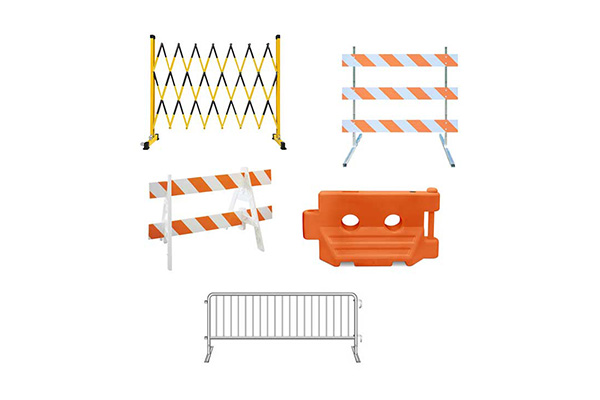
What Are Traffic Barricades?
Traffic barricades are portable or fixed devices designed to restrict access, mark hazardous areas, and guide road users around work zones. Depending on their design, they may feature one or more horizontal rails, reflective markings, warning signs, or specialized panels.
Barricades are commonly used in road construction, utility maintenance, event traffic management, and temporary road closures.
Common Applications of Traffic Barricades
- Road closures: Restrict vehicle access to closed roads, lanes, or construction areas.
- Construction zones: Separate work areas from vehicle or pedestrian traffic.
- Utility maintenance: Protect workers repairing underground pipes, electrical systems, or drainage infrastructure.
- Pedestrian management: Direct pedestrians around temporary hazards when suitable accessible barricade systems are used.
- Public events: Control access to restricted areas and organize pedestrian movement.
Advantages of Traffic Barricades
Traffic barricades provide a clear visual signal that an area is restricted or requires special attention. Many models can accommodate warning signs, making them suitable for communicating road closures, detours, and other traffic instructions.
Their horizontal structure can also provide a more continuous visual boundary than individual cones or barrels, depending on the design and arrangement.
Limitations of Traffic Barricades
Barricades may require more storage space and assembly time than individual cones. Their stability, portability, and suitability for vehicle impacts depend on the specific design, installation, and applicable safety requirements.
Best for: Road closures, restricted access, work-zone boundaries, and applications requiring prominent warnings.
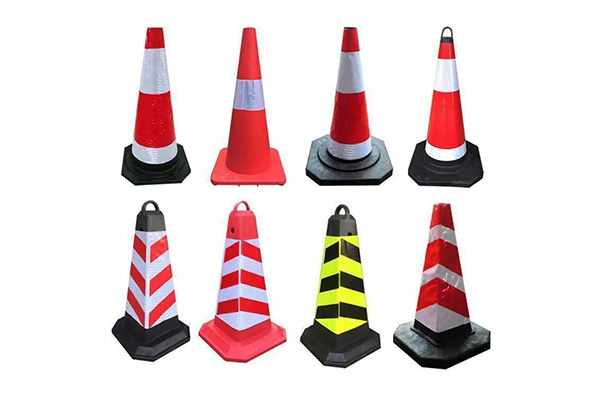
What Are Traffic Cones?
Traffic cones are lightweight, cone-shaped devices used to mark lanes, identify hazards, and guide vehicles or pedestrians through temporary traffic control areas.
Typically manufactured from flexible plastic or rubber-based materials, traffic cones are easy to transport, deploy, collect, and reposition. They are especially useful for short-duration work and situations where traffic patterns change frequently.
Common Applications of Traffic Cones
- Road maintenance: Mark potholes, pavement repairs, and temporary maintenance areas.
- Lane closures: Guide vehicles away from closed lanes.
- Parking management: Reserve spaces and direct vehicles in parking lots.
- Emergency response: Mark accident scenes and temporary hazards.
- Training and events: Organize vehicle movement and define temporary routes.
Advantages of Traffic Cones
Traffic cones are versatile, compact, and easy to deploy. Their lightweight construction makes them convenient for crews that need to establish or remove temporary traffic patterns quickly.
They are also available in different heights, colors, base designs, and reflective configurations to suit different environments and local requirements.
Limitations of Traffic Cones
Cones can be displaced by strong winds, vehicle turbulence, or accidental contact. They may also provide less visual prominence than larger traffic drums, particularly when used on high-speed roads or in complex work zones.
Cones alone should not be assumed to provide a physical barrier or sufficient pedestrian protection.
Best for: Short-term maintenance, temporary lane guidance, parking control, and frequently changing work zones.
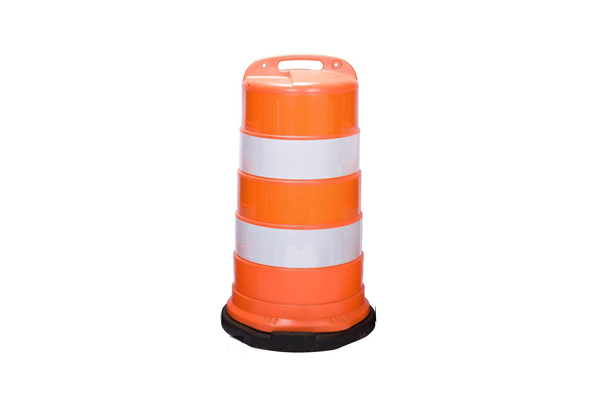
What Are Traffic Barrels?
Traffic barrels, also called traffic drums, are large, generally cylindrical traffic control devices used to channelize vehicles and make work zones more visible.
Many traffic barrels feature orange bodies with alternating orange-and-white reflective bands. Their larger size gives drivers a more prominent visual reference than smaller cones, making them useful for extended work zones and temporary lane shifts.
Traffic barrels are commonly manufactured from lightweight, deformable plastic and may incorporate a base designed to improve stability.
Common Applications of Traffic Barrels
- Highway construction: Mark work zones and temporary lane closures.
- Road resurfacing: Separate active traffic lanes from paving operations.
- Traffic channelization: Guide vehicles through temporary lane shifts and detours.
- Bridge maintenance: Identify restricted areas and direct traffic around repair work.
- Longer-duration projects: Maintain a consistent traffic pattern where devices remain in place for extended periods.
Advantages of Traffic Barrels
Traffic barrels offer a larger visual profile than standard traffic cones. Their reflective bands can improve nighttime conspicuity when appropriate materials and configurations are used.
They are also portable enough to be repositioned as construction conditions change, while their size makes them suitable for clearly delineating longer work zones.
Limitations of Traffic Barrels
Traffic barrels generally require more storage and transportation space than cones. They may also cost more per unit and require additional handling when moving large quantities.
Like cones, ordinary traffic barrels are channelizing devices rather than guaranteed vehicle-restraint systems. They should not be treated as crash barriers unless a specific product has been designed and approved for that purpose.
Best for: Highway construction, extended work zones, temporary lane shifts, and applications requiring a larger visual warning.
Barricades vs. Cones vs. Barrels: Key Differences
The main difference between barricades, cones, and barrels is their primary function. Barricades are particularly useful for marking closures and restricted access, cones excel at flexible temporary guidance, and barrels provide a larger visual profile for channelizing traffic.
| Feature | Traffic Barricades | Traffic Cones | Traffic Barrels |
|---|---|---|---|
| Primary purpose | Restrict access and mark closures | Mark hazards and guide traffic | Channelize traffic in work zones |
| Typical design | Rails, panels, or barrier-style structures | Tapered, cone-shaped body | Large cylindrical drum |
| Visual prominence | Depends on type and configuration | Generally lower | Generally higher than standard cones |
| Portability | Varies by size and design | Very easy to carry | Portable but bulkier |
| Storage efficiency | Depends on design | Generally excellent | Requires more space |
| Deployment speed | Varies by model | Usually very fast | Fast, but bulkier to handle |
| Common applications | Road closures and restricted areas | Short-term work and parking control | Highway work and extended lane channelization |
| Sign mounting | Available on suitable models | Usually limited | Available on suitable models |
| Physical protection | Design-dependent; not automatically crashworthy | Not a physical barrier | Not a physical barrier |
Note: These are general comparisons. Actual performance depends on the product design, dimensions, materials, reflectivity, installation, and local traffic control requirements.
When Should You Use Barricades, Cones, or Barrels?
The best traffic control device depends on the project’s duration, road conditions, traffic speed, visibility requirements, and the level of access restriction needed.
Choose Traffic Barricades for Road Closures and Restricted Access
Traffic barricades are often the preferred choice when a road, lane, sidewalk, or work area needs to be clearly identified as closed or restricted.
For example, a municipal contractor repairing a damaged roadway may use appropriately configured barricades with warning signs to communicate a road closure. The exact barricade type should match the closure arrangement and applicable regulations.
Choose Traffic Cones for Short-Term and Flexible Traffic Control
Traffic cones are a practical option for projects requiring rapid deployment and frequent repositioning.
For example, a maintenance crew repairing a small section of pavement may use cones to guide vehicles around the work area. Their portability makes them convenient for mobile crews and temporary operations.
However, cone height, reflective bands, stability, and spacing should be selected according to the road environment and governing standards.
Choose Traffic Barrels for High-Visibility Work Zones
Traffic barrels are particularly useful when a larger visual profile is desirable, such as on highway construction projects or along longer temporary lane closures.
For example, a road contractor resurfacing a multilane highway may use traffic drums to establish a clearly visible channelized route around the work area.
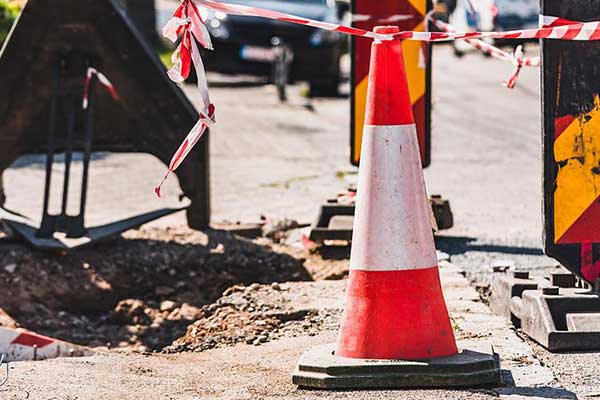
Can Barricades, Cones, and Barrels Be Used Together?
Yes. Combining different traffic control devices can provide a more effective traffic management setup than relying on a single device type.
Each device can perform a different role within the same work zone. For example, a road construction project may use:
- Traffic barricades to mark a road closure or restricted work area.
- Traffic cones to guide vehicles through a transition into an open lane.
- Traffic barrels to delineate a longer work-zone boundary and maintain a consistent traffic path.
Warning lights and signs, where required, to provide advance notice and improve visibility.
Barricades vs. Cones vs. Barrels: Which is Best?
There is no single best option for every traffic control project. The right choice depends on the job’s specific requirements.
- Traffic barricades: Best suited to clearly marking closures, restricted access, and designated work areas.
- Traffic cones: Best suited to short-duration work, flexible lane guidance, and applications requiring frequent repositioning.
- Traffic barrels: Best suited to highly visible channelization and longer-duration road construction projects.
For many projects, a combination of these devices provides a practical solution. However, none should be treated as a substitute for a properly designed crash barrier when positive vehicle restraint or impact protection is required.
Before purchasing, evaluate the work-zone layout, traffic conditions, applicable standards, and product specifications. Selecting suitable traffic control devices helps improve work-zone organization, supports safer traffic movement, and reduces unnecessary equipment replacement.
Conclusion
Now that you understand the differences between barricades, cones, and barrels, you can choose the right traffic control devices based on your project’s safety requirements, working conditions, and budget.
Roadsky offers a range of road safety products to support different traffic control applications. Contact us to explore suitable solutions for your project.