

Types of Road Dividers: A Comprehensive Guide
Road dividers play an important role in modern traffic management by separating lanes, controlling vehicle movement, and improving road safety. They are widely used on highways, urban roads, parking areas, and construction zones to reduce accidents and guide drivers safely.
Different types of road dividers are designed for different applications. Some provide permanent separation between opposing traffic flows, while others offer temporary traffic control solutions.
What Are Road Dividers?
Road dividers are physical barriers or traffic control devices installed on roads to separate traffic lanes, prevent dangerous vehicle movements, and organize traffic flow. They can divide opposite directions of traffic, separate vehicle lanes, protect pedestrians, or create safe work zones.
Depending on the materials, design, and installation method, road dividers can be permanent or temporary.
Why Are Road Dividers Important?
Road dividers provide several benefits for road safety and traffic management:
- Improve traffic safety: They reduce head-on collisions by separating vehicles traveling in opposite directions.
- Control traffic flow: Road dividers help organize lanes and prevent illegal turns or lane changes.
- Protect road users: They provide additional protection for pedestrians, cyclists, and road workers.
- Enhance visibility: Many dividers include reflective materials to improve nighttime visibility.
- Support traffic management: Temporary dividers help manage traffic during road construction and maintenance projects.
Common Types of Road Dividers
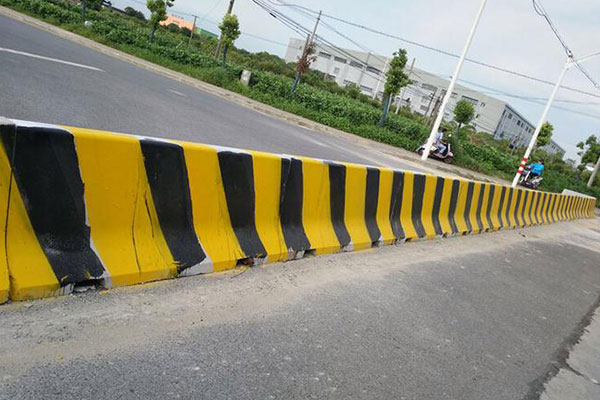
1. Concrete Road Dividers
Concrete road dividers are among the most commonly used permanent traffic barriers. They are made from reinforced concrete and provide strong impact resistance.
These dividers are widely used on highways, bridges, tunnels, and urban roads where long-term traffic separation is required.
Advantages:
- Extremely durable and long-lasting
- High resistance to vehicle impact
- Requires little maintenance
- Suitable for heavy traffic areas
Applications:
- Highway medians
- Expressway barriers
- Bridge protection
- Permanent lane separation
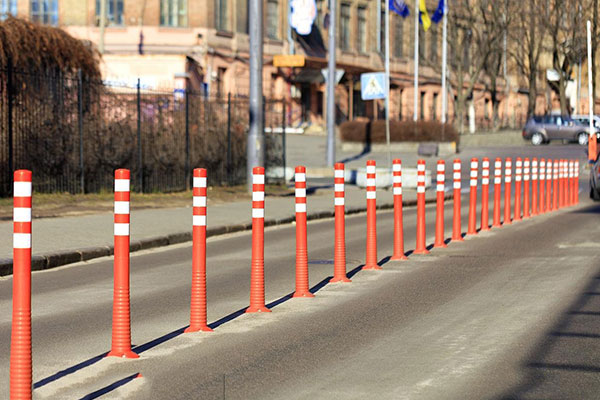
2. Plastic Road Dividers
Plastic road dividers are lightweight and flexible traffic management products commonly used for temporary applications. They are usually made from high-density polyethylene (HDPE) and can often be filled with water or sand for added stability.
Advantages:
- Lightweight and easy to transport
- Quick installation and removal
- Weather-resistant
- Reusable for different projects
Applications:
- Road construction zones
- Temporary lane separation
- Parking areas
- Events and traffic control areas
Plastic road dividers are a popular choice for projects that require frequent changes in traffic layouts.
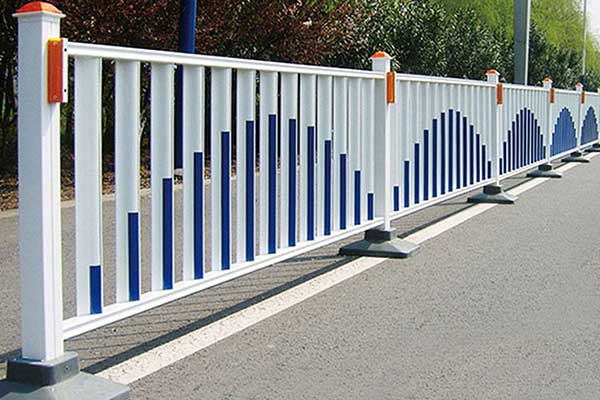
3. Steel Road Dividers
Steel road dividers provide a strong and durable solution for separating traffic lanes. They are commonly used in areas where high strength and impact resistance are required.
Advantages:
- High mechanical strength
- Long service life
- Suitable for harsh environments
- Can withstand significant impacts
Applications:
- Industrial areas
- High-speed roads
- Security zones
- Traffic protection systems
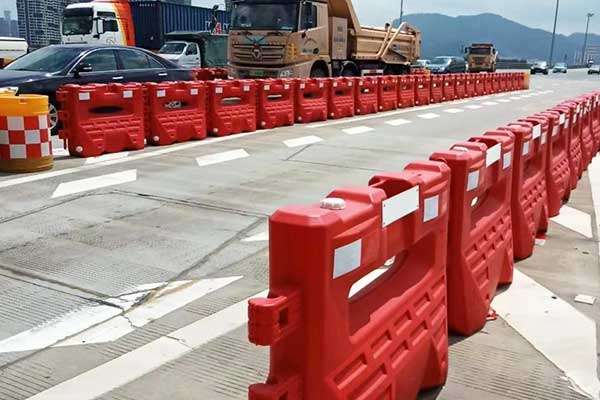
4. Water-Filled Road Barriers
Water-filled barriers are a type of temporary road divider designed for flexible traffic management. They are made from durable plastic materials and filled with water after installation.
Advantages:
- Easy to install and relocate
- Safer impact performance compared with rigid barriers
- Cost-effective for temporary projects
- Visible colors improve driver awareness
Applications:
- Roadwork zones
- Lane closures
- Temporary traffic diversions
- Public events
5. Rubber Road Dividers
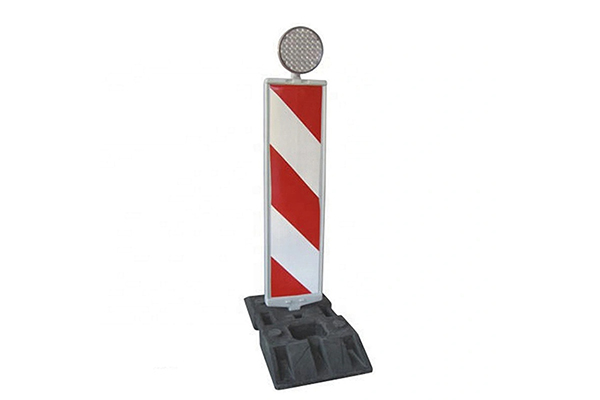
Rubber road dividers are flexible and commonly used in parking lots, pedestrian areas, and low-speed traffic environments.
They are usually made from recycled rubber materials and designed to absorb minor impacts.
Advantages:
- Flexible and impact-resistant
- Reduces vehicle damage
- Easy installation
- Environmentally friendly
Applications:
- Parking spaces
- Residential areas
- Bicycle lanes
- Pedestrian zones
6. Cable Road Dividers
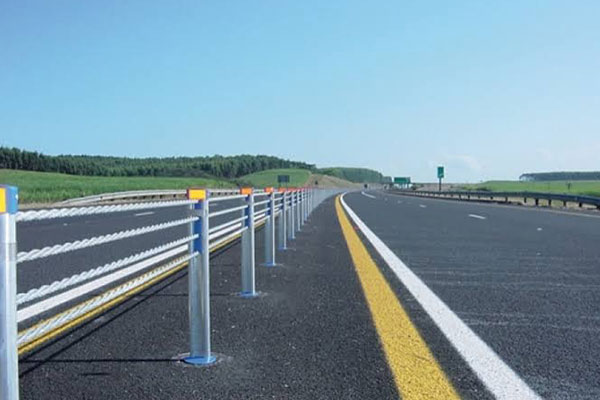
Cable road dividers use tensioned steel cables supported by posts to separate traffic lanes. They are often installed on highways and roads with safety concerns.
Advantages:
- Effective at redirecting vehicles
- Flexible impact absorption
- Lower installation cost compared with some rigid barriers
- Suitable for long road sections
Applications:
- Highway medians
- Rural roads
- Mountain roads
- High-risk locations
7. Traffic Cones and Channelizers
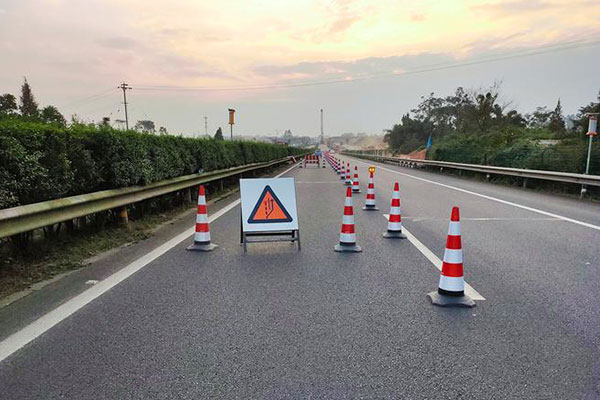
Although not traditional barriers, traffic cones and channelizers are widely used as temporary road dividers. They guide vehicles and create clear separation between traffic lanes.
Advantages:
- Easy deployment
- Highly visible
- Low cost
- Suitable for short-term traffic control
Applications:
- Road maintenance
- Parking management
- Temporary lane changes
- Emergency situations
8. Steel Beam Road Dividers
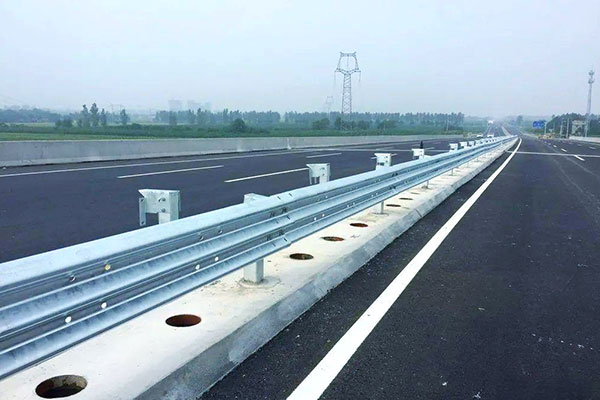
Steel beam dividers, such as guardrail systems, are designed to prevent vehicles from leaving the roadway or entering dangerous areas.
They are commonly installed on highways, bridges, and roadsides.
Advantages:
- Strong vehicle protection
- Good impact absorption
- Suitable for high-speed roads
- Provides continuous protection
Applications:
- Highway safety barriers
- Roadside protection
- Median separation
How to Choose the Right Road Divider?
Choosing the correct road divider depends on several factors:
1. Application Purpose
Consider whether the divider is needed for permanent traffic separation, temporary construction zones, parking management, or pedestrian protection.
2. Traffic Conditions
High-speed roads usually require stronger barriers, while low-speed areas may only need lightweight dividers.
3. Installation Requirements
Temporary projects benefit from portable solutions such as plastic or water-filled barriers, while permanent roads often require concrete or steel systems.
4. Durability and Maintenance
Projects in harsh environments should choose materials that can withstand weather, impacts, and long-term use.
5. Visibility Requirements
Reflective strips, bright colors, and warning signs can improve visibility, especially at night or in poor weather conditions.
Road Dividers vs. Road Barriers: What is the Difference?
Although the terms are sometimes used interchangeably, road dividers and road barriers have slightly different purposes.
- Road dividers mainly focus on separating traffic flows and organizing lanes.
- Road barriers are designed primarily to prevent vehicles from entering restricted or dangerous areas.
Conclusion
Road dividers are essential components of modern traffic management systems. From durable concrete barriers to flexible plastic and water-filled dividers, each type offers unique advantages for different road safety applications.
Selecting the right road divider requires considering traffic volume, road conditions, installation needs, and safety requirements. With proper planning and the right traffic control products, road dividers can significantly improve road safety and create more organized transportation environments.
Looking for reliable road dividers and traffic safety solutions? Roadsky provides high-quality road safety products to meet different project needs. Contact us today for professional solutions and support.